Last updated November 20, 2026
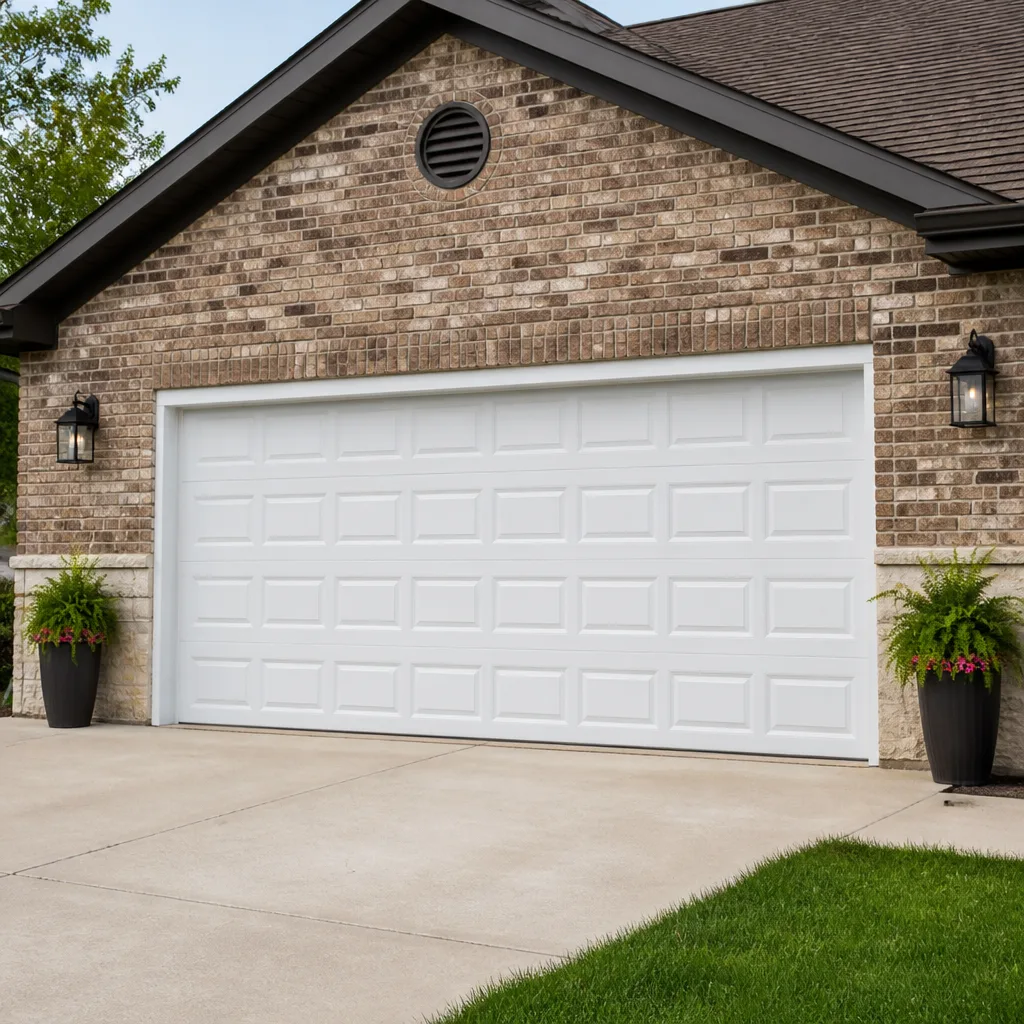 Raised-panel steel
 Carriage house
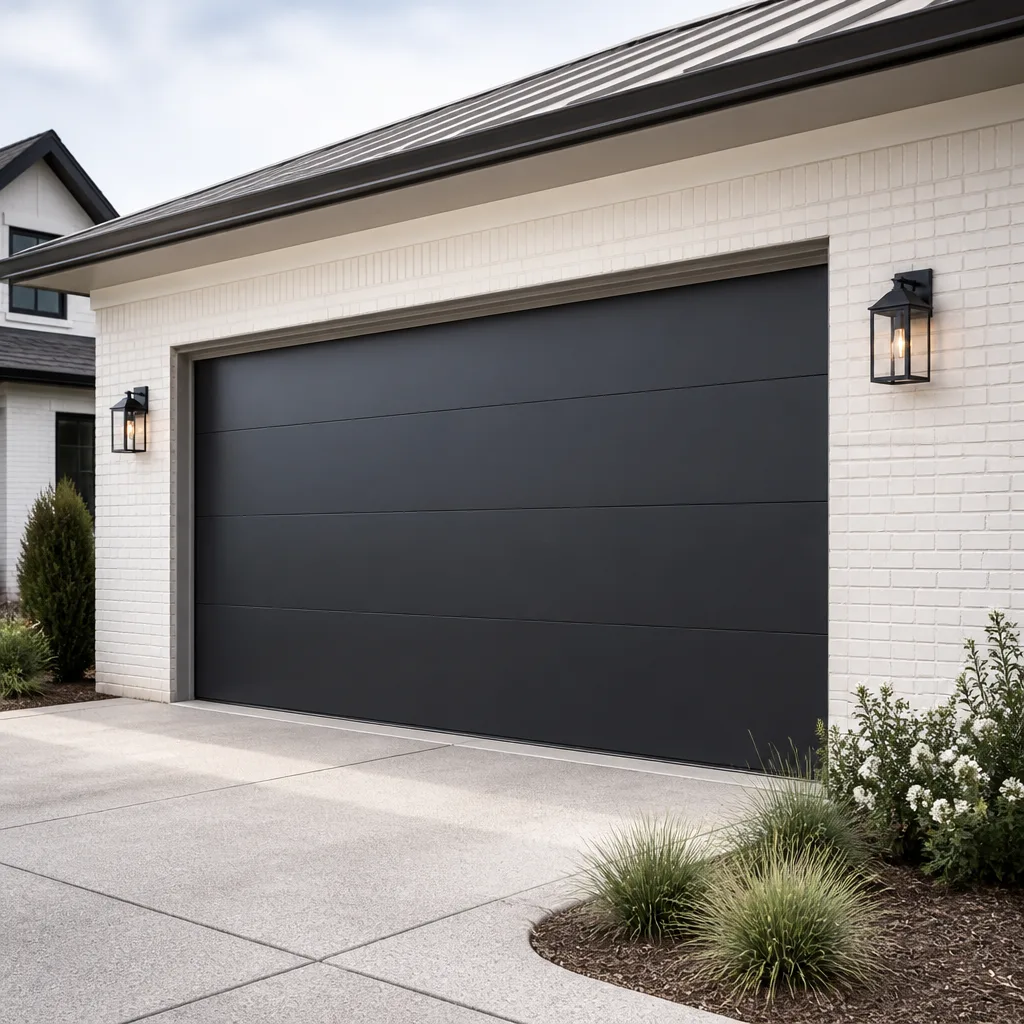 Modern flush
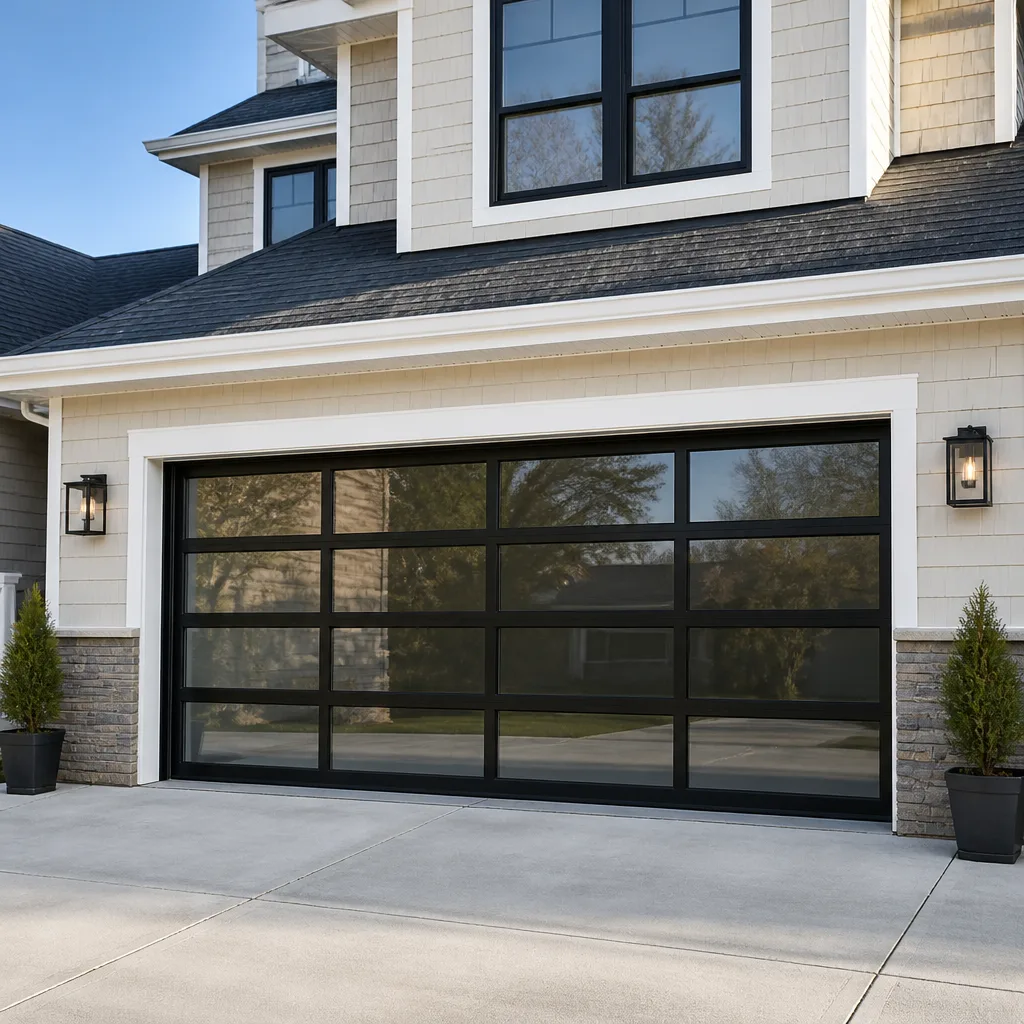 Full-view glass
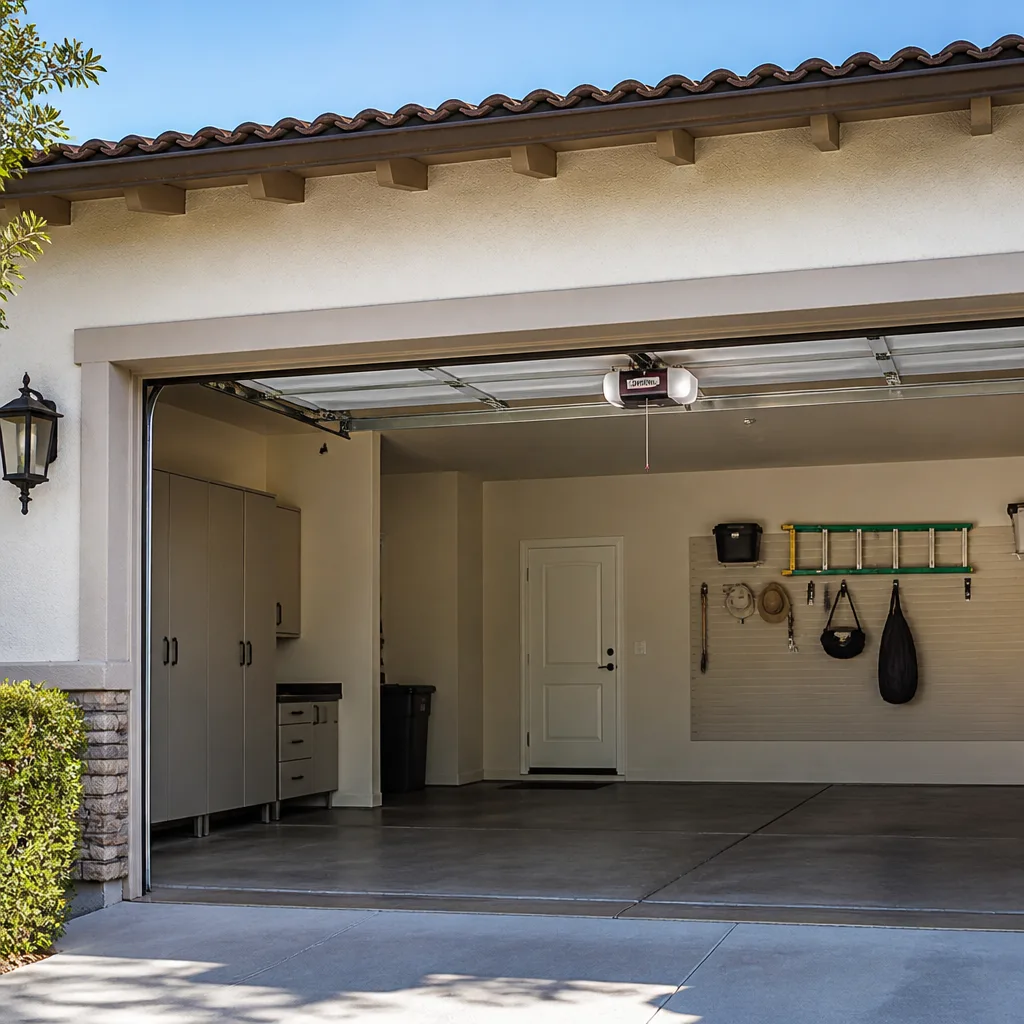 LiftMaster openers
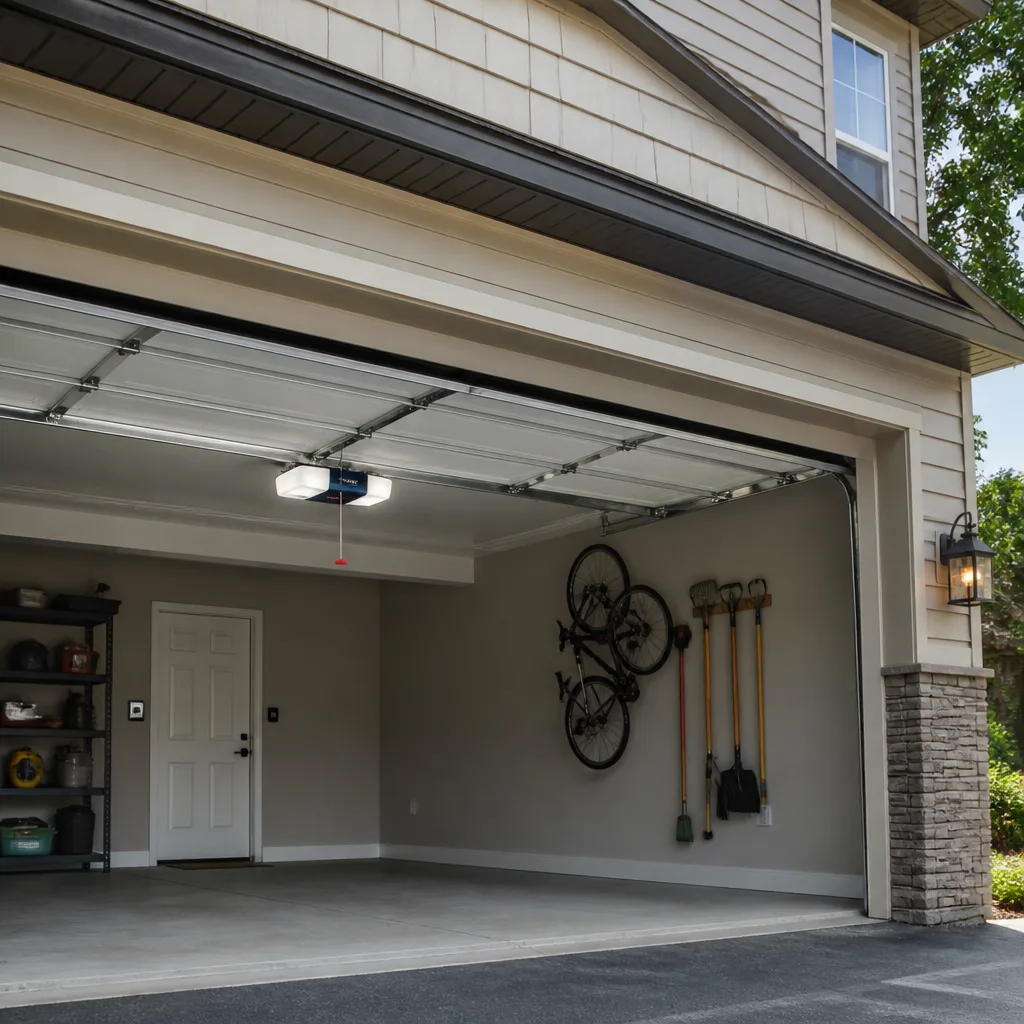 Chamberlain openers
Full 25-point door and opener safety check with every visit - springs, cables, rollers, tracks, and your LiftMaster or Chamberlain opener included
You get a price before we start. It does not change when the pro arrives.
Get your free estimateGarage Door Warning Signs: A Burien Homeowner’s Reference Guide
Nearly every garage door that fails catastrophically gave its owner weeks of notice first. A spring that snaps at 7am usually started popping three weeks earlier. An opener that grinds to a halt was making noise for a month. The signals are there – most homeowners just don’t know what they’re hearing or seeing, or they write it off as “an old door being old.” In a wet, cool climate like ours, some of those signals look different than they do in drier parts of the country. This guide walks through what your door is telling you, decoded by component, so you can tell the difference between normal settling and a symptom that’s about to become an emergency. We’ve seen all of it on doors across Burien, and we’d rather you recognize the warning than pay for a surprise.
Quick Answer
Garage door warning signs fall into three categories – sound, movement, and visible damage – and the most urgent are a door that stops mid-travel and reverses, a loud bang followed by a door that won’t lift, and any visible fraying on the lift cables. If you hear a sharp pop and the door becomes very heavy or won’t open, stop using it and call a technician: that’s usually a broken spring, and operating the door can cause the cable to fail too.
Styles & brands we work with
- Raised-panel steel
- Carriage house
- Modern flush
- Full-view glass
- LiftMaster openers
- Chamberlain openers
Table of Contents
- What Sounds Should Make You Call?
- What to Look For on the Door and Hardware
- What Uneven Movement Tells You
- Which Warnings Mean Call Today vs. Schedule a Visit?
- Normal Settling Noise vs. a Real Symptom
- Early Rust and Corrosion Signs in Burien’s Climate
- How Brand Behavior Affects the Warning Signs
- What You Can Check Yourself Each Season
What Sounds Should Make You Call?
Sound is the earliest warning a garage door gives, and it’s the one most homeowners learn to ignore because it comes on gradually. What you’re listening for are changes in character, not just volume. A door that’s always been a little loud isn’t necessarily failing – a door that’s gotten louder or developed a new tone is. Here’s what the three most common sounds usually mean:
- Grinding from the opener head. A metallic grind coming from the motor housing itself (not the door) typically points to worn drive gears, a failing bearing, or a stripped sprocket. On chain-drive units the chain may be dry or misaligned. On belt-drive units a smooth motor that suddenly grinds is a mechanical failure inside the housing, and it tends to get worse fast.
- Popping or snapping at the spring. A torsion spring that has started to pop has likely developed a stress crack in the coil. That crack grows each cycle. A single loud “bang” from overhead followed by a door that suddenly feels very heavy is the spring giving way – that’s a stop-using-it moment.
- Scraping or squealing at the rollers and tracks. A dry roller scrapes. A roller with a worn bearing squeals. A track that’s been nudged out of alignment produces a rhythmic scrape at the same point in travel. None of these are emergencies, but unaddressed roller problems wear the track and bend hinges over time.
In our experience, the grinding opener is the one Burien homeowners wait longest on, because the door still opens. That’s the trap – gear wear is progressive, and a stripped gear eventually leaves the door sitting closed with the motor spinning freely. When you’re ready to have it looked at, our garage door opener repair covers everything from a grinding gear to a dead logic board. And if the sound is a single pop followed by a heavy door, treat that as a spring call, not an opener call.
What to Look For on the Door and Hardware
Visual inspection catches what ears miss. Stand inside your garage with the door closed and look at the system as a whole. The specific patterns below are the ones that matter:
- Cable fraying patterns. A healthy lift cable is a tight, even bundle of wire strands. A failing cable shows individual strands lifting away from the bundle, especially near the drum at the top of the door or near the bottom bracket. Fraying is a stop-using-it warning – a cable that snaps can whip and cause serious injury.
- Track gaps. Look along the vertical and horizontal tracks for a gap between the track and the door panel rollers, or visible bends where the track meets its mounting brackets. A track gap signature usually appears on the side the door has been binding against.
- Hinge and bracket wear. A hinge that’s visibly bent (not just loose) suggests the door has been running out of alignment. Loose bolts at the hinge and track brackets are a maintenance item; bent metal is a symptom.
- Panel distortion. A panel that has bowed or separated shows the door is under uneven load. On a two-car door especially, a single distorted panel on one side points to a spring or cable issue on that side, not the panel itself.
- Weather seal deterioration. The bottom seal and the perimeter stop molding take a beating in wet climates. A seal that’s torn or compressed lets water and cold air in, and water at the door’s bottom track accelerates rust on the hinges and bottom brackets.
If you see fraying on a cable or a spring coil with visible rust or a hairline crack, don’t operate the door. The hardware at play here is under extreme tension and is a genuine injury risk – this is work for a technician trained on high-tension spring and cable systems, not a weekend project. If the cables, springs, or bottom brackets are the concern, our garage door spring repair is the right service to call.
What Uneven Movement Tells You
Watch the door travel the whole way up and down, ideally from inside the garage. A healthy door moves evenly, stays level at both bottom corners, and settles with a slight cushion at the floor. The tells below point to a specific side or component:
- One corner lags or lifts first. A door that goes up unevenly is almost always experiencing unequal spring tension. If one side is pulling harder than the other, the spring on the weak side is losing tension, or the cable on that side is slipping. Because the load is uneven, continuing to run the door stresses the good spring and the good cable too.
- Door stops mid-travel and reverses. This is usually a safety-system trigger: the photo-eye lens may be dirty, misaligned, or blocked by an object on the floor. Clean the lenses first. If the reversal continues with a clear path, the photo-eye or the opener’s limit/travel setting needs attention, which is a technician visit.
- Door goes up but not smoothly, then binds at a height. Binding at the same height every time points to a track issue or a roller riding out of the track at that elevation.
- Door won’t close all the way, or bounces back up. On newer openers this can be a travel-limit setting or a logic-board fault. It’s worth a check, and often fixable without replacing the opener.
We diagnose these by brand behavior because the same symptom looks different across makes. A Genie chain drive with a reversing door, a LiftMaster belt unit that stops at a fixed height, and a Chamberlain wall-mount that acts sluggish each tend to trace to different causes inside the unit. Working on the brand you already own, rather than guessing, shortens the path to a fix. A complete rundown of what we handle for doors and openers is on our garage door repair page.
Which Warnings Mean Call Today vs. Schedule a Visit?
Not every warning is a same-day emergency. Here’s how we’d sort them if we were standing in your driveway:
Stop using the door and call today
- A loud pop or bang from the spring, then a door that feels extremely heavy or won’t lift.
- Any visible fraying on a lift cable, or a cable that has come off its drum.
- A door that goes up crooked and hangs at an angle, or a door that’s off its tracks.
- Any time a door panel is hanging, a track has separated from the wall, or the door is being held up by something other than its mechanism.
Schedule within the week
- A grinding opener that still operates the door.
- A door that reverses on its own with a clear photo-eye path.
- A popping or creaking spring that hasn’t yet failed but has developed a new sound.
- A track scrape at one point in travel, or a door that bounces at the floor.
Address at the next convenient visit
- Squealing or scraping rollers.
- A door that’s louder than it used to be but travels normally.
- Loose hinge bolts or a slack chain.
- Weather seal wear and minor surface rust that hasn’t reached the coil or cable.
If you’re not sure which bucket a warning belongs in, call and describe what you’re hearing and seeing. We’d rather talk you through it than have you wait on something that’s about to fail. Our phone line is a free estimate line, and we’ll tell you honestly whether it’s a stop-using-it situation or something that can wait for a scheduled visit.
Normal Settling Noise vs. a Real Symptom
Every garage door makes some noise, and a home’s framing moves with the seasons. The distinction we use is change over time shaped by use. A door that’s been a little creaky since you moved in is probably normal. A door that was quiet last winter and isn’t this winter is telling you something changed. Three guidelines:
- A steady noise is baseline; a new noise is a signal. If you can hum the door’s sound, it’s baseline. If you notice it because it caught your ear, it’s new – investigate.
- Noise that tracks the weather is usually seasonal. Cooler, wetter months tighten wood framing and make hardware bind a little more. That’s normal. Noise that shows up in mild weather and stays is not.
- Noise tied to a position in travel is mechanical. A scrape or pop that happens at the same height, every cycle, points to a specific component wearing at that spot – a roller, a hinge, a track section, or a spring approaching a stress point.
The “it’s an old door” assumption is the most expensive one we run into. Age alone doesn’t cause sudden symptoms; wear does. A twenty-year-old Clopay or Amarr door in good adjustment can outlast a five-year-old door that’s been run out of balance. Fixing what’s actually worn is cheaper than replacing a door that still has plenty of service left – and that’s the repair-first approach we take on every call.
Early Rust and Corrosion Signs in Burien’s Climate
Burien’s wet, cool climate creates a specific corrosion pattern that homeowners in drier regions never deal with: moisture sits on garage hardware rather than evaporating quickly, and the constant cycle of damp and dry leaves rust on the exact parts you least want it on. What to watch for:
- Torsion spring coil. Healthy springs have a protective finish. Early corrosion shows as brown speckling between the coils or near the anchor plates at the ends. A rusty spring isn’t automatically failing, but corrosion is what eventually leads to the stress crack that snaps it. If you see surface rust on the coil and the spring has started popping, that’s a schedule-now situation.
- Cable near the bottom bracket. The bottom bracket is closest to the garage floor, and the floor sees the most moisture – a wet car, a wet broom, splash from a rainy driveway. Look for rust where the cable terminates. A rust-blushed cable end is often the first sign of a cable nearing failure.
- Hinges and bottom brackets. Surface rust here is common and generally reversible with cleaning and lube. But if rust has seized a hinge, the door will bind at that panel and stress the rest of the hardware. Handle it before it becomes a track problem.
- The bottom weather seal. A seal that’s not keeping water out is a corrosion accelerant for everything below it. In our experience, most of the rust we see on Burien doors traces back to a compromised seal that let moisture pool inside the door’s bottom edge.
The simplest habit for a wet-climate door is to keep the bottom seal in good shape and to wipe down the spring and cable runs after any obvious water intrusion. It doesn’t replace a professional inspection, but it slows the corrosion clock considerably.
How Brand Behavior Affects the Warning Signs
Different opener brands fail in different ways, and knowing what your brand tends to do first helps you read the warning correctly. The mechanical brand names you’re likely to see in this area include LiftMaster, Chamberlain, Genie, Clopay, Amarr, Wayne Dalton, Craftsman, and Raynor, and we work on all of them. A few notes from what we see on the bench:
- Chain-drive units (common on many Genie and Craftsman models) tend to announce wear through an increasingly loud rhythmic clank and a chain that has stretch and slack. A slack chain is the first sign, and it’s a maintenance item before it’s a replacement item.
- Belt-drive units run quiet, so any grind you hear from the motor head is significant – the belt masks the kind of wear that makes chain drives noisy.
- Screw-drive units tend to develop a grinding or hesitation at one point in travel as the screw wears. A hesitation at the same spot each time is the tell.
- Wall-mount and jackshaft units show travel and limit faults differently, and their safety reversal can come from a different sensor than a ceiling-mount unit.
Clopay and Amarr doors, being among the most widely installed residential panels, present similar panel and hinge wear patterns across models, but the wear shows up in slightly different places depending on how many sections the door has and whether it’s steel-back insulated or single-layer. We work on what you already have, which means an honest diagnosis based on the behavior of your specific brand rather than a pitch to swap it out.
What You Can Check Yourself Each Season
You don’t need tools to catch most of these signals, and a five-minute walk-around every season does as much for reliability as anything you can buy. What we’d check:
- Listen on one full open-close cycle. Stand inside the garage and just listen. Note any new sound and where in travel it happens.
- Watch the door travel. Both bottom corners should lift evenly. Any lag on one side is a spring-tension warning.
- Look at the spring. Surface rust speckling, a coil with a visible crack, or a spring that has popped are the three things to check.
- Look at the cable near the bottom bracket. Fraying strands or rust blues are warnings.
- Clean the photo-eye lenses and test the safety reversal. Wave an object in the beam; the door should reverse. If it doesn’t, the safety system needs attention.
- Check the bottom seal and the perimeter stop molding. A torn seal lets water in, and water at the bottom edge accelerates corrosion.
- Lube the moving metal. Rollers, hinges, and the spring (not the track) benefit from a proper garage door lubricant once a season – a light coating that keeps moisture off the metal.
If any check turns up a warning you can’t place, our Burien Garage Door Repair Pros team can look at it and tell you honestly whether it’s a fix, a wait, or a stop. That’s the whole point of a reference guide like this one: the more you can read the warning yourself, the less likely a failure catches you off guard.
Common Mistakes to Avoid
- Ignoring a new sound because the door still works. A grinding opener is a symptom, and it usually gets worse. Waiting only buys you a more expensive repair.
- Running the door after a pop or bang. A snapped spring leaves the lift cable as the only thing holding the door’s weight. Operating it in that state is how a spring repair turns into a spring-and-cable repair – or an injury.
- Trying to adjust a torsion spring yourself. Springs are under extreme tension. That’s not a weekend-project component, and this is work for a technician trained on high-tension systems.
- Assuming rust is only cosmetic. Surface rust on a hinge is usually harmless. Rust on a torsion coil or a cable end is an early warning of a failure.
- Replacing a door because of a symptom that could be a repair. Uneven movement, a scraping sound, or a door that reverses often traces to a $200-ish adjustment or a component swap. A new door is rarely the answer to a warning sign.
- Forgetting the safety reversal test. The photo-eye and reversal are safety features, and they should be tested. A door that won’t reverse needs a look.
- Letting a compromised bottom seal sit through a wet Burien season. Water at the door’s bottom edge is the most common source of the corrosion we see.
See the difference
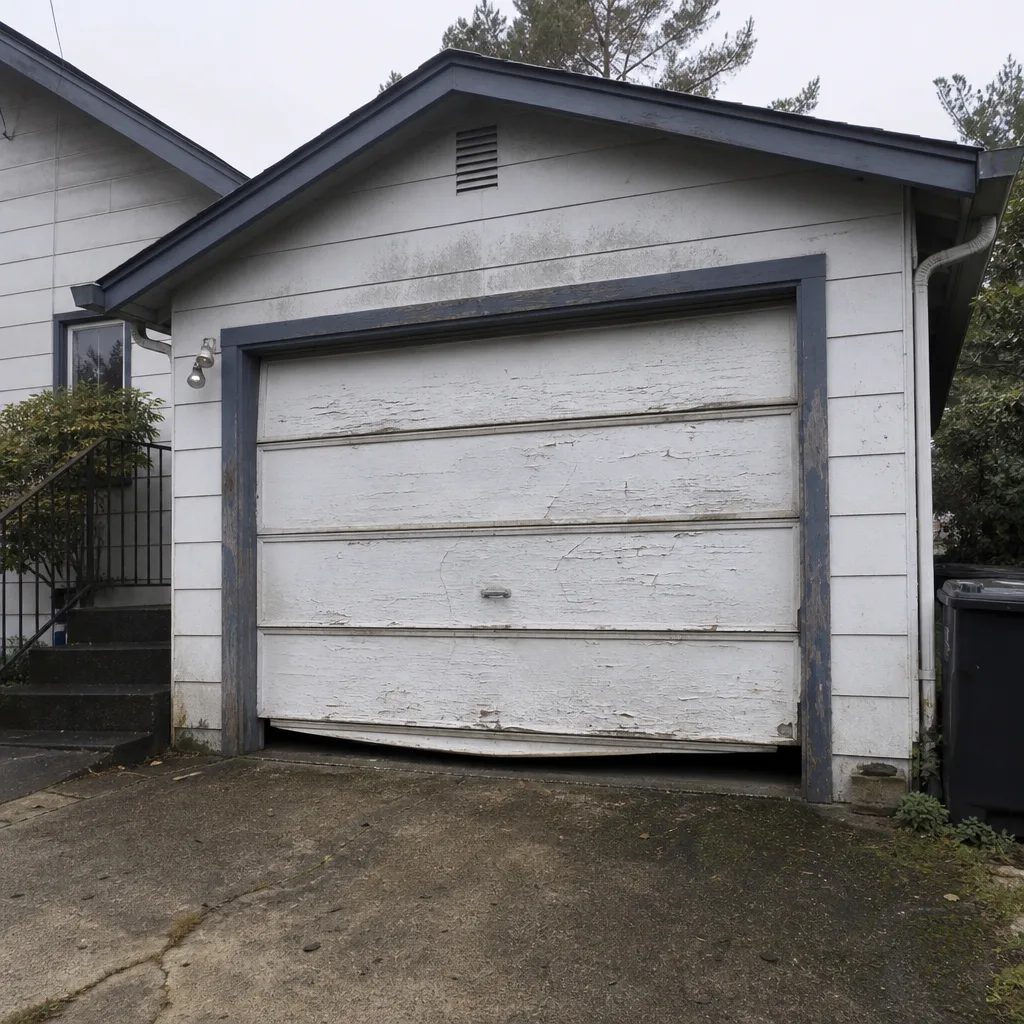 Before
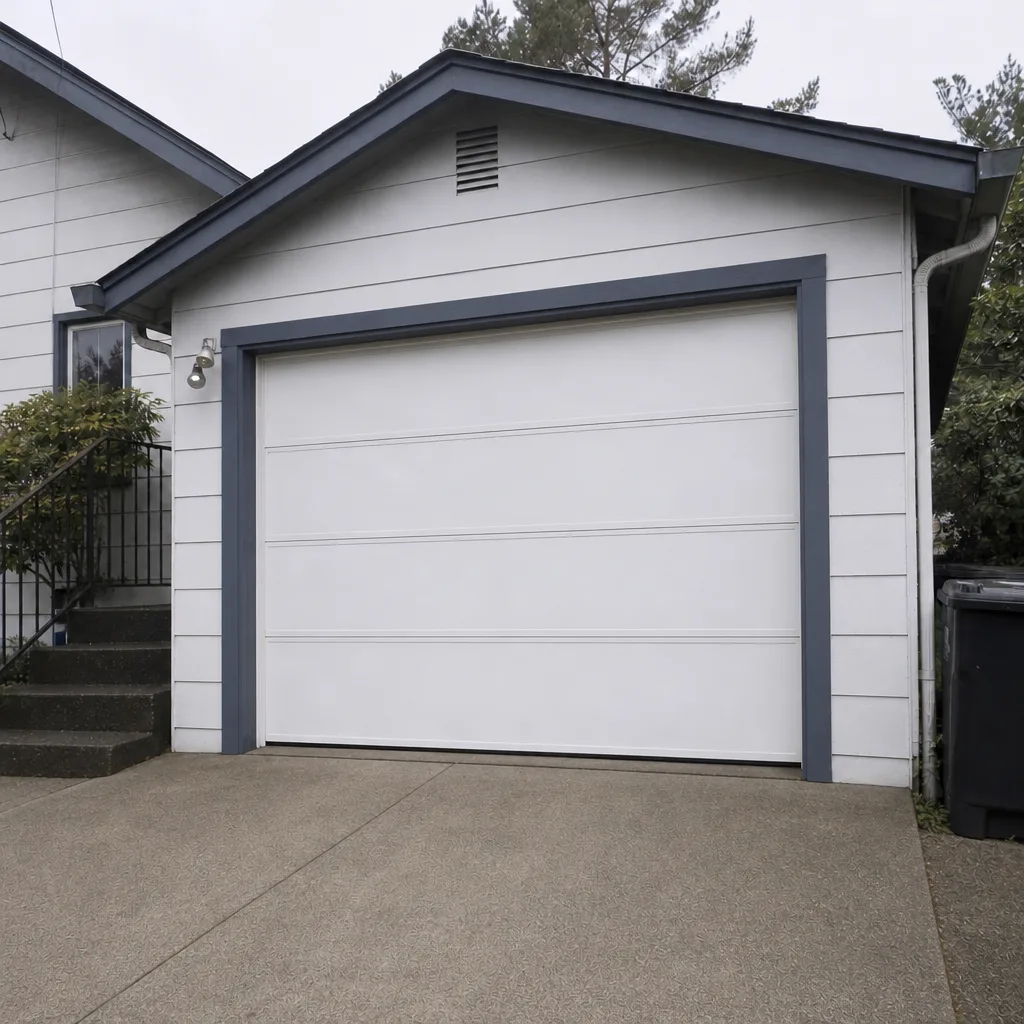 After
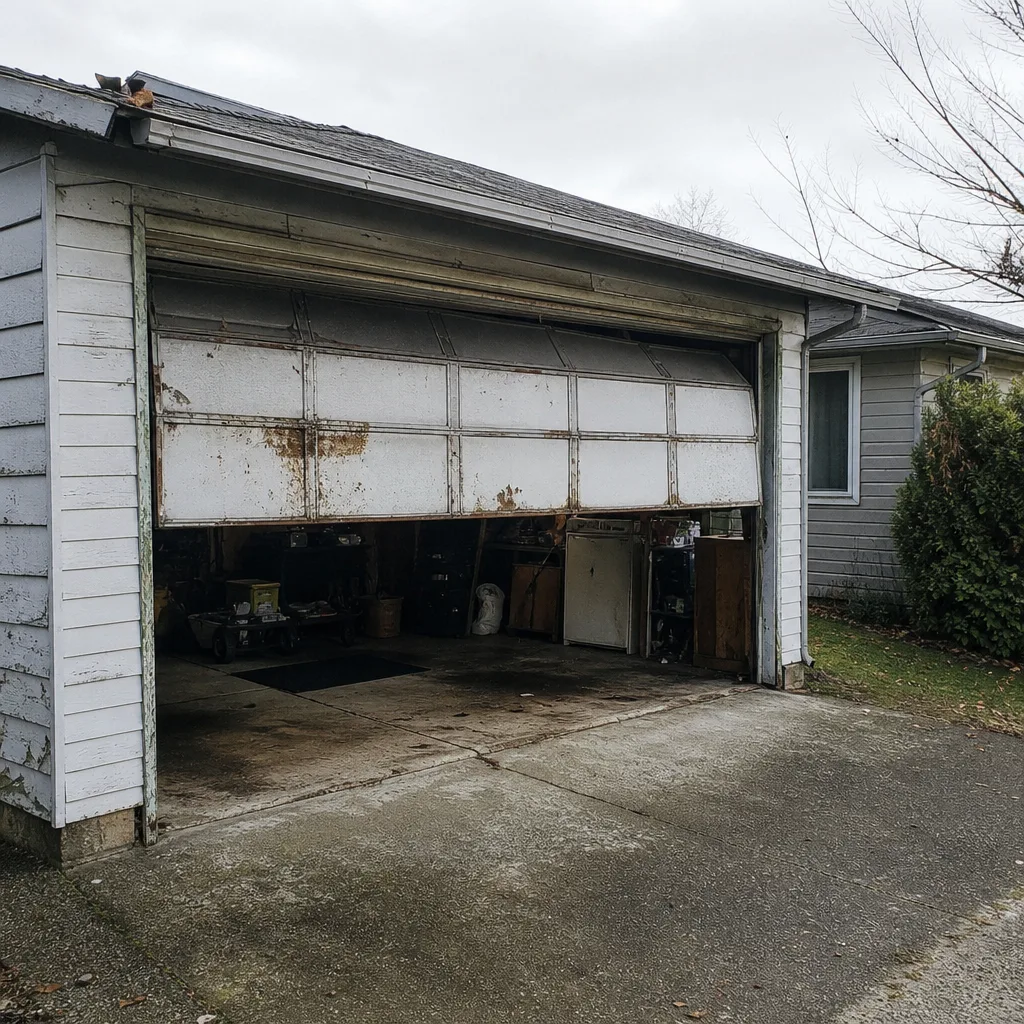 Before
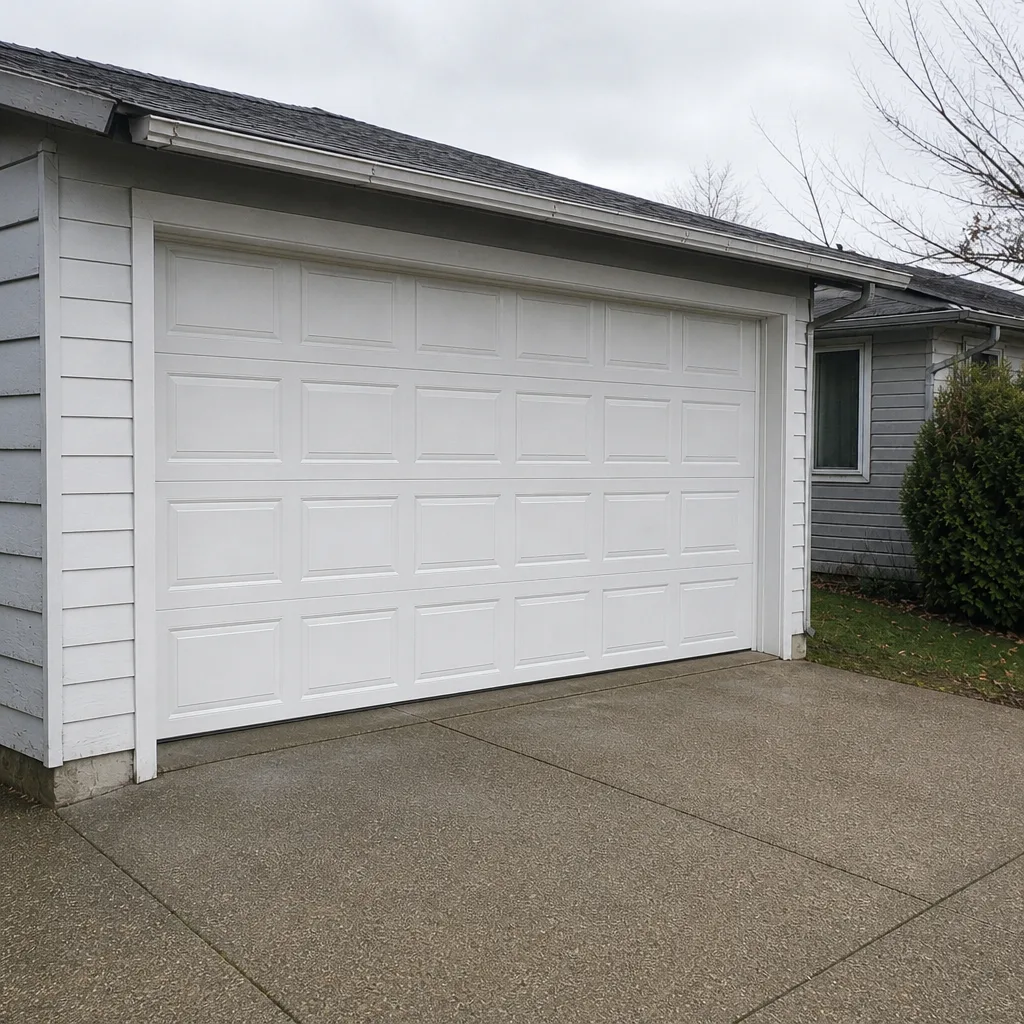 After
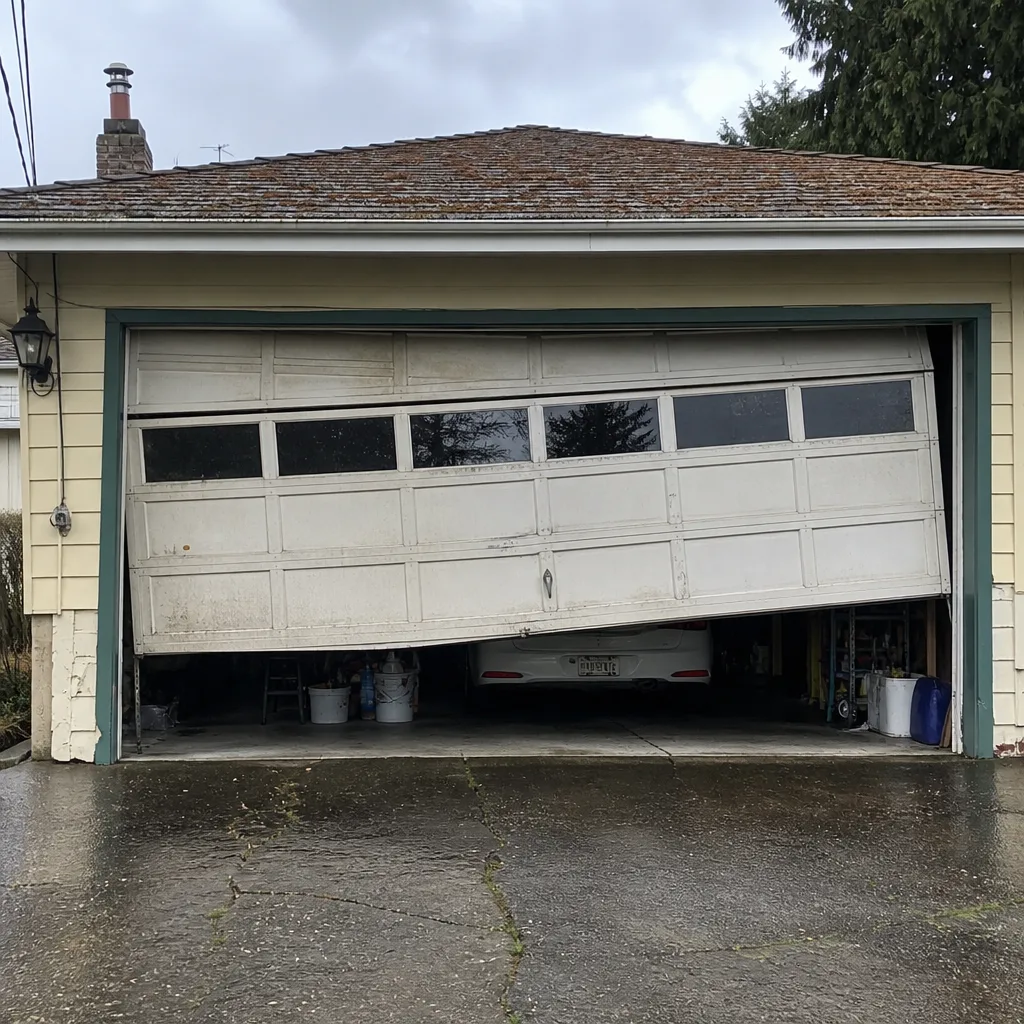 Before
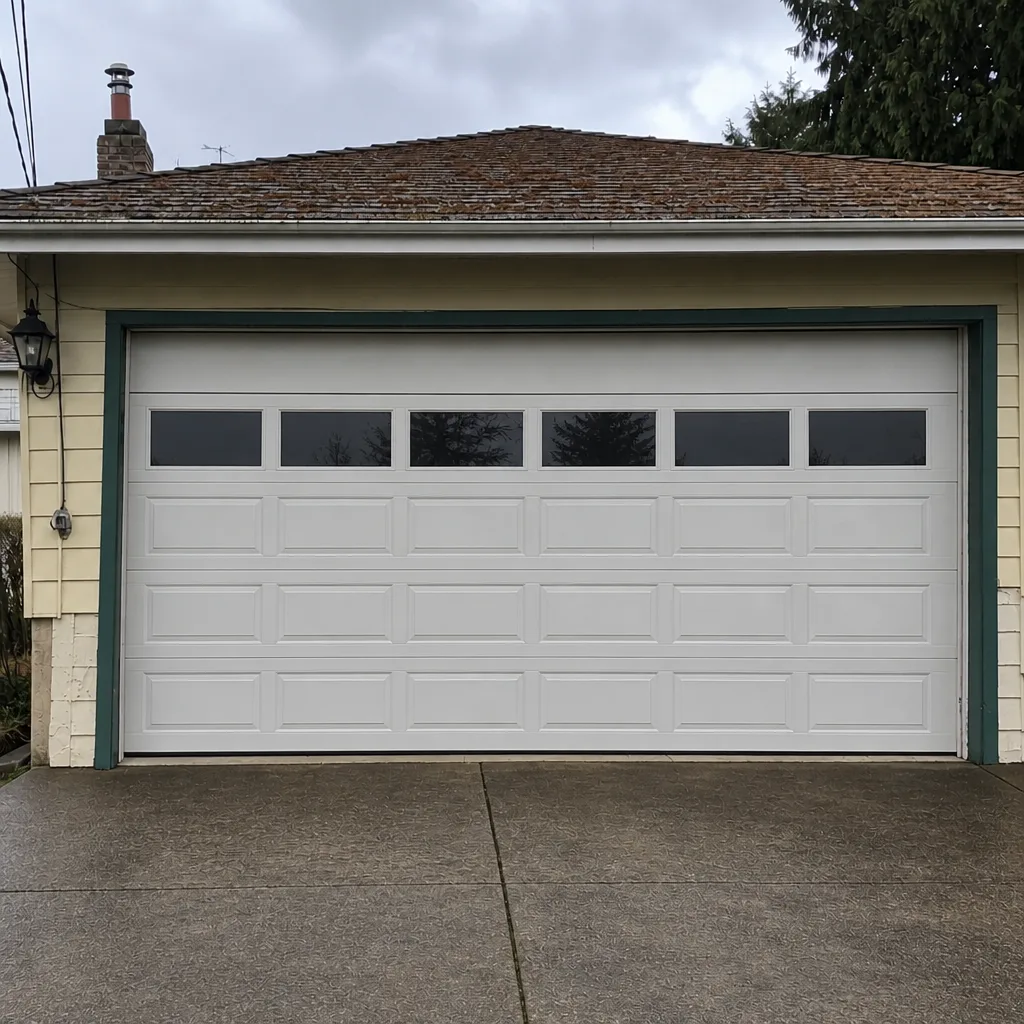 After
When to Call a Professional
Call a professional if the door won’t stay up on its own, if you see frayed cables or a broken spring, if the door is crooked or off its tracks, if the opener grinds and won’t move the door, or if the safety reversal fails a test. Those are the situations where continuing to run the door risks the equipment and, more importantly, the people around it. High-tension springs and lift cables injure homeowners regularly, and a trained technician can shut the door down safely, diagnose the cause, and tell you whether it’s a repair or something bigger. Our technicians have up to 15 years of experience on these exact components. If you’re not sure whether your warning qualifies, describe it when you call and we’ll be straight with you. Burien Garage Door Repair Pros offers free estimates in Burien – call (877) 542-9430.
Frequently Asked Questions
In our experience it’s a change in the opener’s sound – a grind or clank that wasn’t there before – followed closely by a spring that’s started to pop or creak. Both tend to come on gradually and both are easy to dismiss because the door still opens. Catch either one early and the repair is usually straightforward. Call (877) 542-9430 for an exact quote – estimates are free.
A well-maintained door can run for many years, and its hardware typically wears on a predictable schedule rather than all at once. Springs tend to be the first component to reach the end of their cycle life; openers often outlast several spring sets. The warning signs in this guide are what tell you where you are in that cycle. Call (877) 542-9430 for a free estimate.
Only if the door is fully raised and safely held, and only for as long as it takes to get the door repaired. A door with a broken spring should not be operated – the door’s weight and the cable tension are unsafe with a spring out of service. Call a technician and have it looked at before you run the door again. Call (877) 542-9430 for an exact quote – estimates are free.
No. We inspect the door, identify the cause, and quote the price before any work starts. The written estimate is the price; if the diagnosis reveals something different from what you described on the phone, we’ll explain the change and get your approval before touching anything. Call (877) 542-9430 for a free estimate.
The local professionals we connect you with are licensed and insured as their state requires, and they’ve been vetted for competence on door, opener, and spring repair. They work on the equipment you already own rather than pushing a replacement. Call (877) 542-9430 for an exact quote – estimates are free.
Permit requirements vary by job and jurisdiction, so the right answer for your specific job comes from the City of Burien’s building department. We’d rather you confirm directly than take a general answer from any contractor. Call (877) 542-9430 and we’ll help you figure out whether your job needs one.
The Bottom Line
A garage door doesn’t fail without warning. It grinds, pops, wobbles, or rusts first – and if you know what to watch for, you can usually get it fixed on your schedule instead of an emergency call. Sort the warning by type: sound, movement, or visible damage. Then sort by urgency: stop using it if a spring has popped or a cable is fraying; schedule within the week if the opener grinds or the door reverses; address at the next visit if it’s rollers, seals, or cosmetic rust. In Burien’s wet climate, pay extra attention to the spring coil and cable ends for early corrosion. And when a warning turns into a real problem, don’t wait on it. Call (877) 542-9430 for a free estimate, and we’ll get the door back in working order safely.
Written by the team at Burien Garage Door Repair Pros.