Last updated November 20, 2026
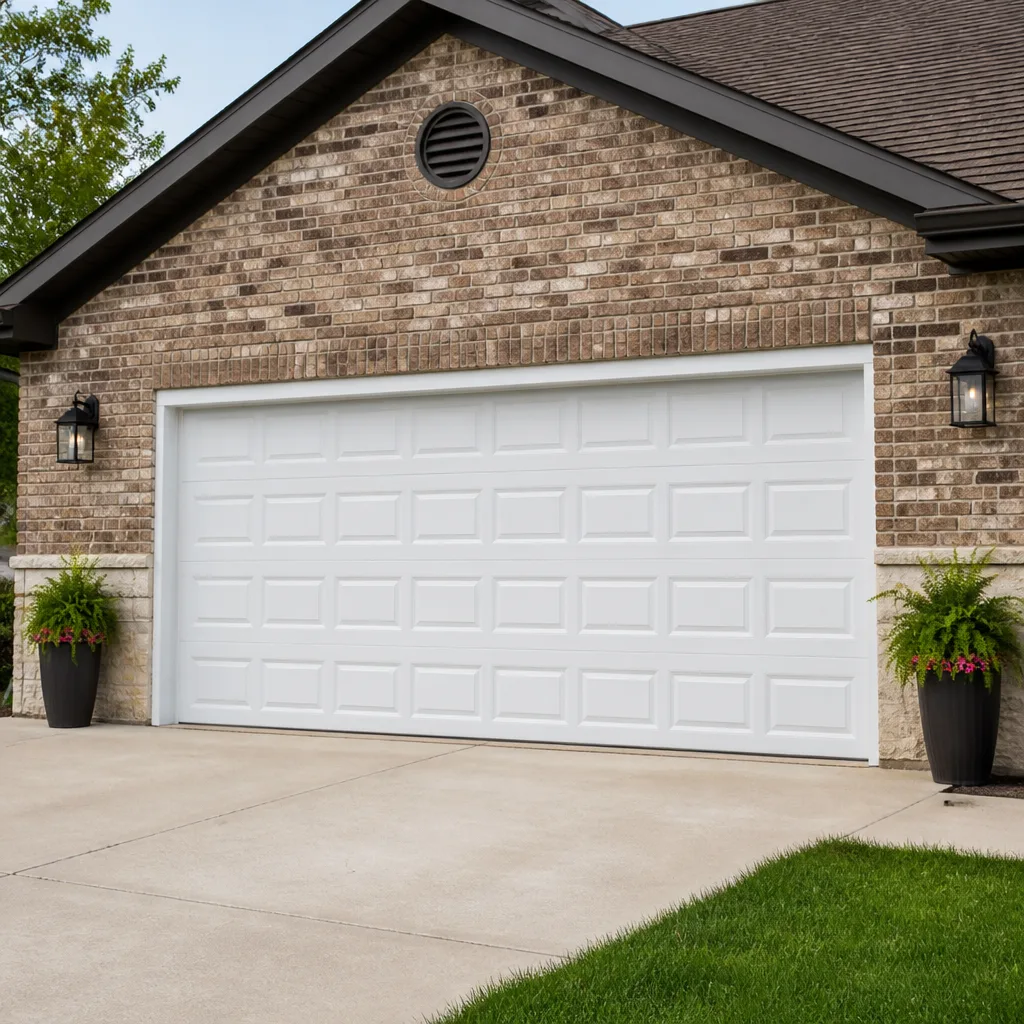 Raised-panel steel
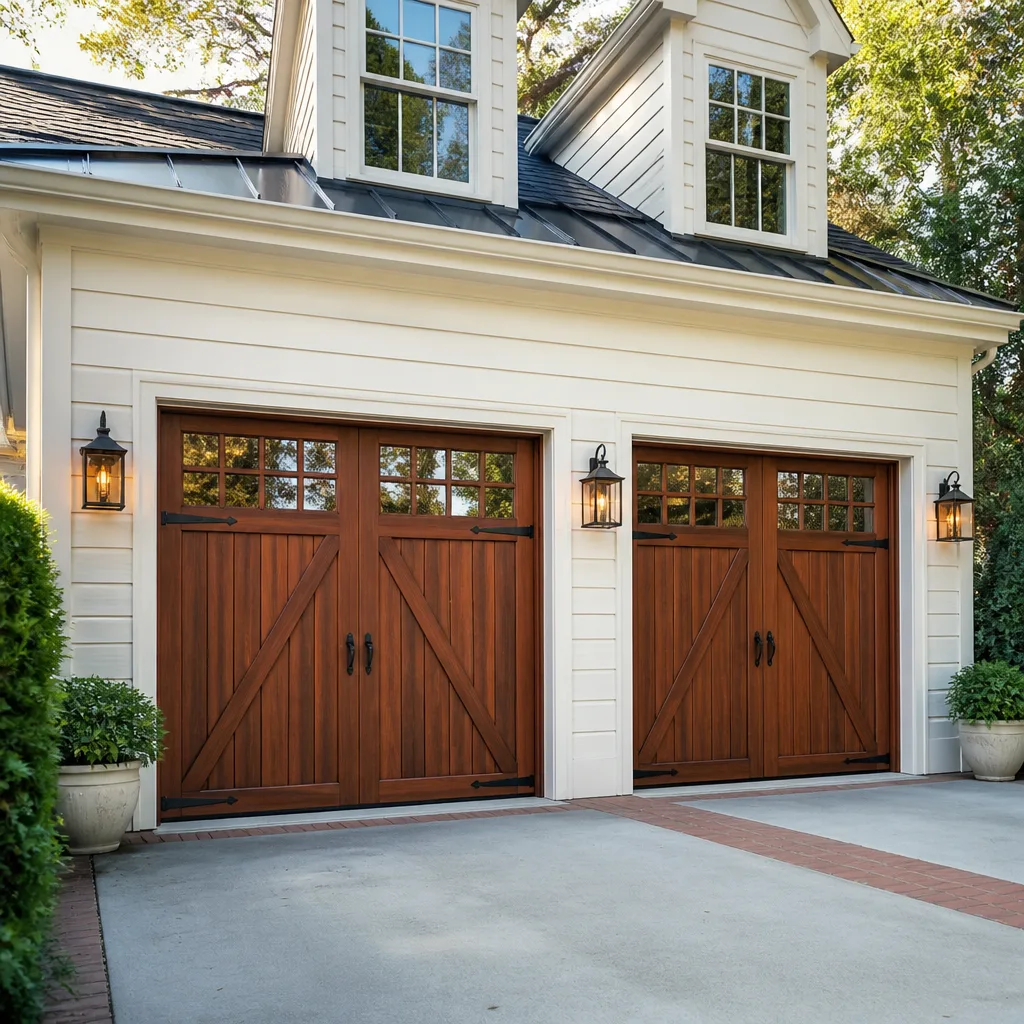 Carriage house
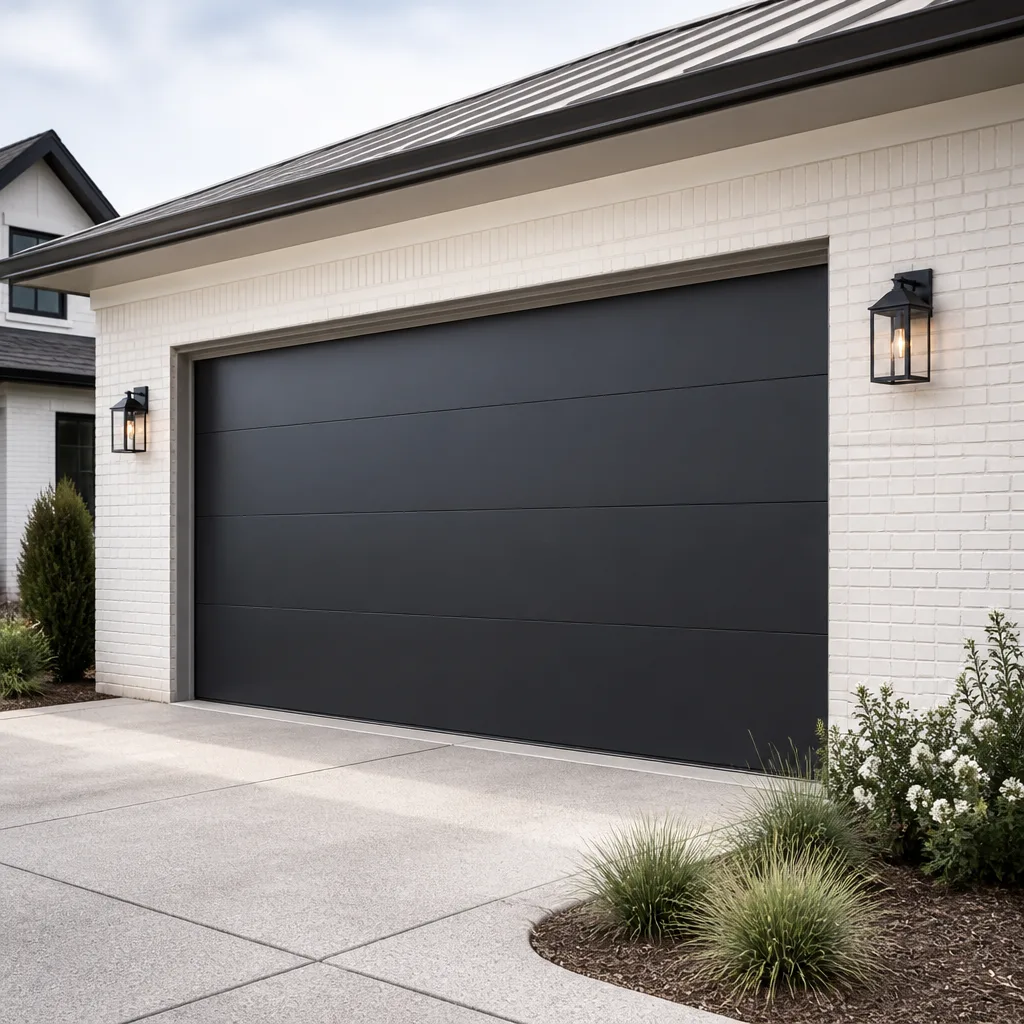 Modern flush
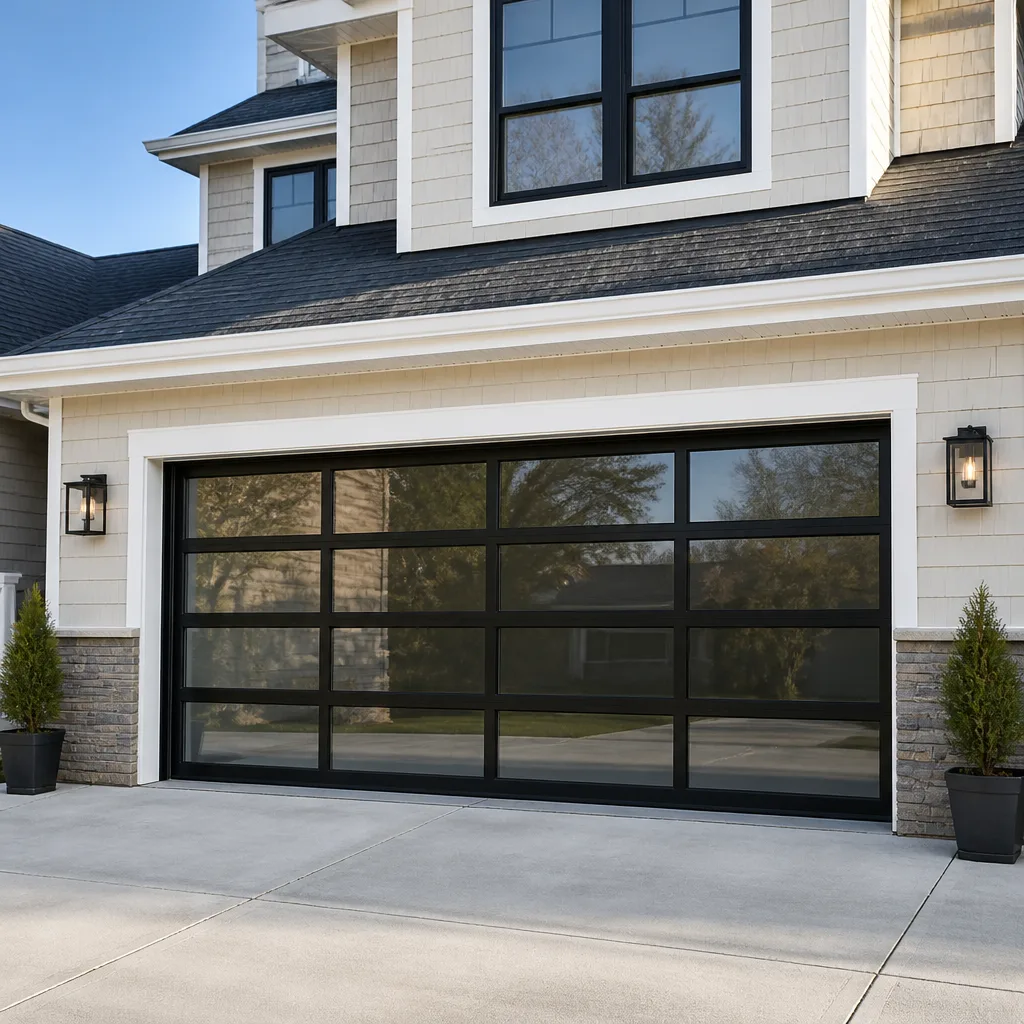 Full-view glass
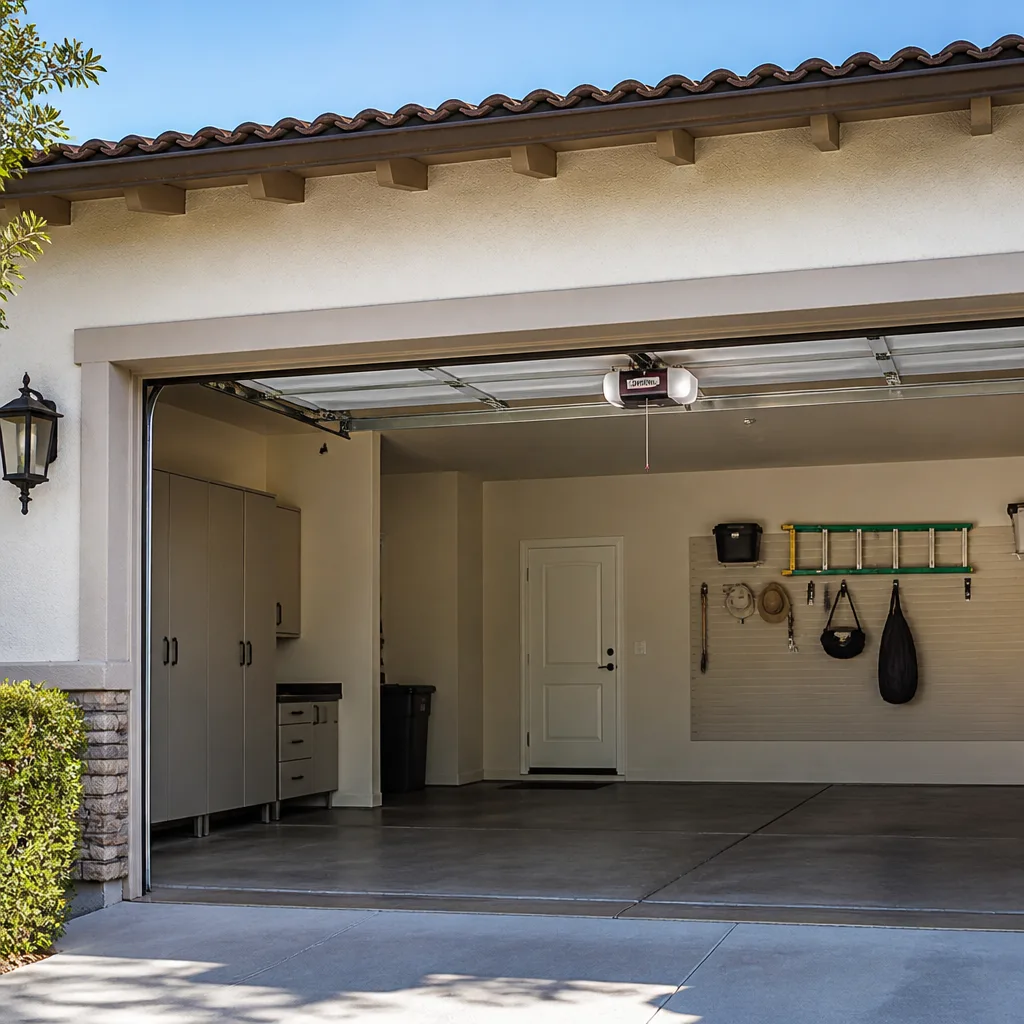 LiftMaster openers
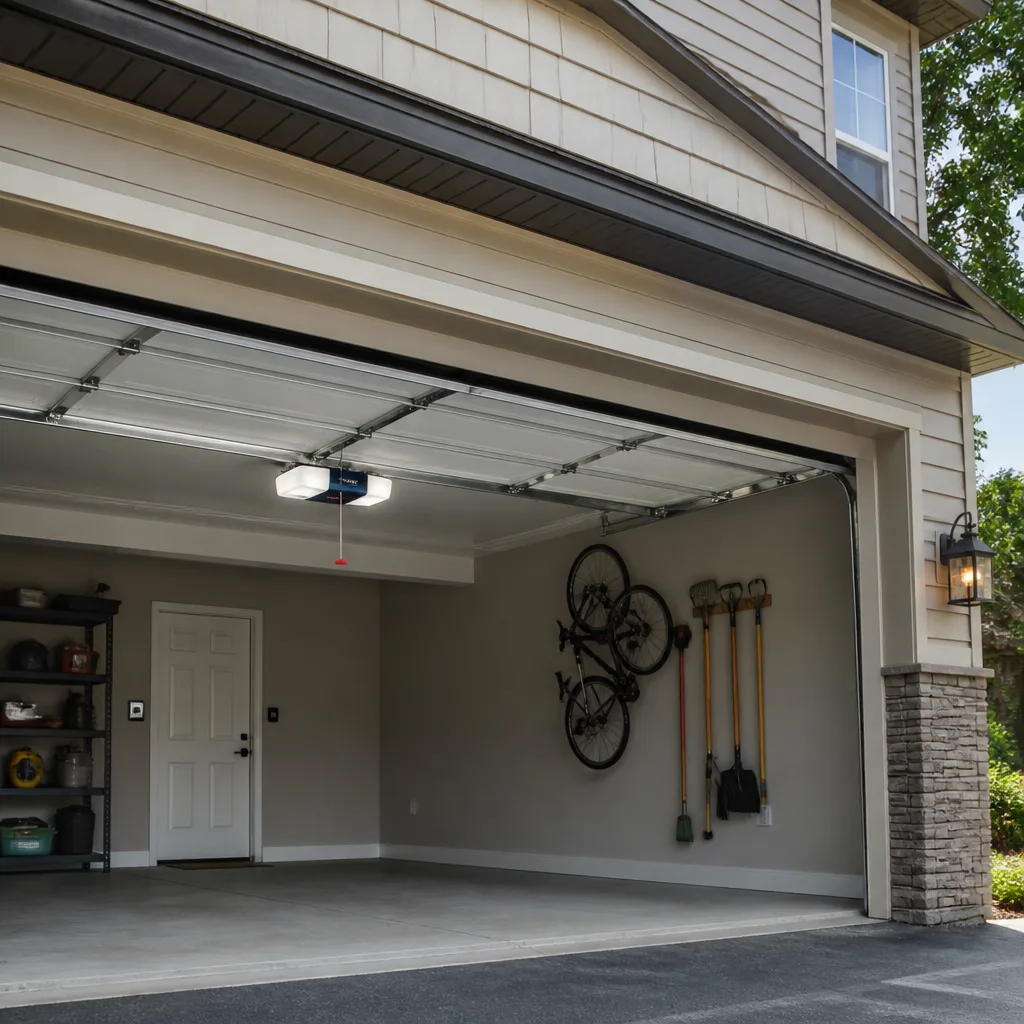 Chamberlain openers
Full 25-point door and opener safety check with every visit - springs, cables, rollers, tracks, and your LiftMaster or Chamberlain opener included
You get a price before we start. It does not change when the pro arrives.
Get your free estimateThe Complete Guide to Garage Doors in Burien
Most garage door advice on the internet was written for a national audience, and a lot of it will quietly shorten the life of your door here. The maintenance routine that helps in Phoenix – dry air, almost no rain – does the opposite in Burien, where months of drizzle and cool temperatures change how springs, cables and steel behave. Add a housing stock that swings from mid-century ramblers to 1990s and 2000s subdivisions, and the equipment in your garage is probably older, and more brand-specific, than the generic guides assume. This guide covers what Burien homes actually deal with: how the local climate wears out hardware, which repairs are safe to touch and which aren’t, how to tell repair from replacement before anyone quotes you, and what a real specialist looks like compared with a door-sales company doing repairs on the side.
Quick Answer
Garage doors in Burien fail fastest at the springs, cables and bottom hardware, largely because wet, cool Pacific Northwest weather drives rust and metal fatigue sooner than in drier regions. Most problems – a snapped spring, a dead opener, a door that came off its tracks – are repairable, and a good specialist will diagnose the actual failure before recommending replacement. High-tension springs and cables are genuinely dangerous to handle yourself, so leave those to a trained technician. Call (877) 542-9430 for a free estimate.
Styles & brands we work with
- Raised-panel steel
- Carriage house
- Modern flush
- Full-view glass
- LiftMaster openers
- Chamberlain openers
Table of Contents
- How Burien’s Climate Affects Springs, Cables and Panels
- What Garage Doors Burien Homes Actually Have, by Era
- Repair or Replace? How to Diagnose Before You Call
- Which Repairs Are Safe to Do Yourself (and Which Are Not)
- Diagnosing Opener Trouble by Brand
- What a Legitimate Burien Specialist Looks Like
- What Garage Door Work Typically Costs
- Garage Door Safety Basics Worth Knowing
How Burien’s Climate Affects Springs, Cables and Panels
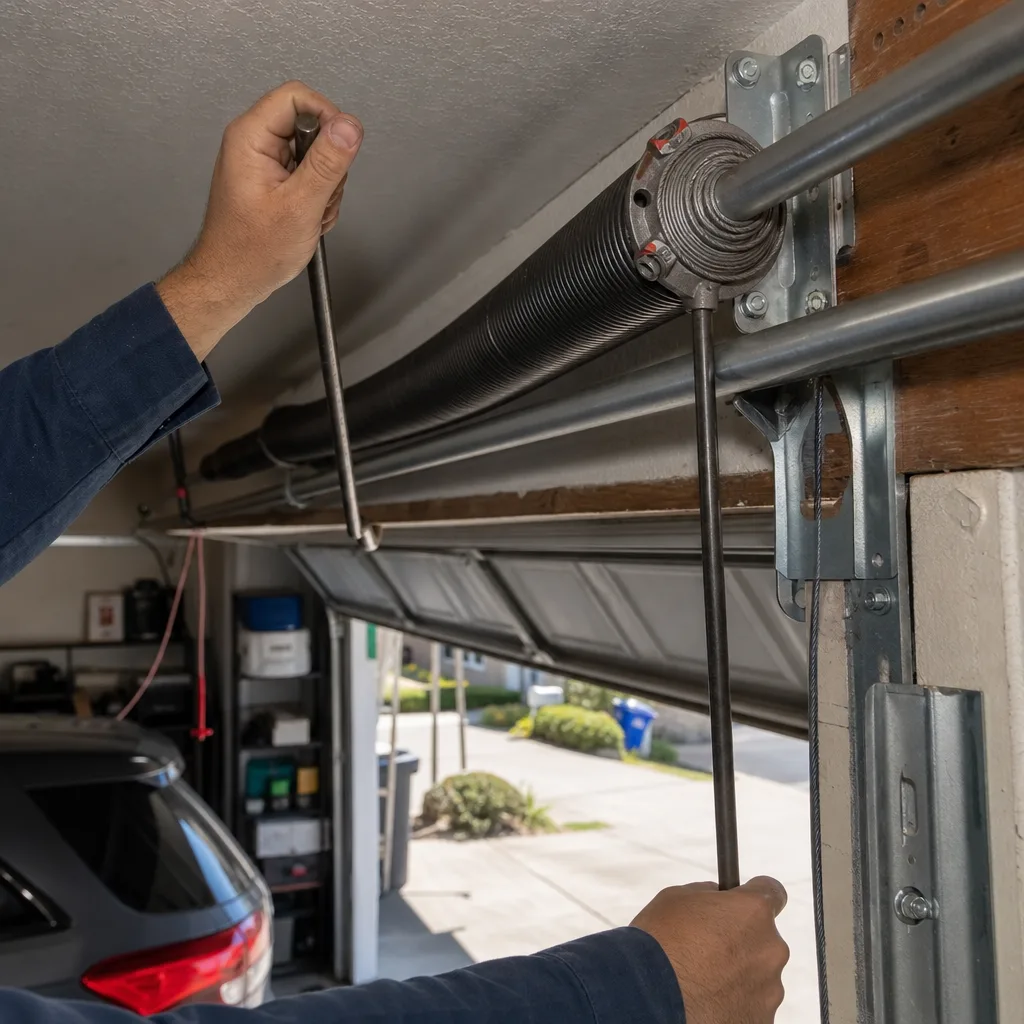
Burien sits in a cool, damp climate with a long wet season and plenty of gray, high-humidity days. That has a direct effect on the metal inside your garage. Steel springs, torsion and extension alike, are under constant tension, and any moisture that reaches them – from humid air, condensation, or a door that lets rain track in along the bottom seal – starts a slow rust cycle. Rust pits the wire, creates a stress point, and that’s where springs break. In a dry climate a spring might reach the end of its rated cycle count; in Burien, corrosion often gets there first. Cables corrode the same way, and a frayed, rusty cable is one of the failures we see most.
Panels and hardware suffer too. Wet bottom seals and damp thresholds feed rust into hinges, rollers and bottom brackets before the rest of the door shows any wear. Steel panels with a worn paint edge or a stone chip will start to rust along that line. Wood doors, still common in older Burien homes, take on moisture at the bottom and around the frame, which can swell the panel and throw the door out of alignment.
- Springs: rust and pitting shorten life; the wet season matters more than door usage.
- Cables: hidden rust and fraying are common; they need a close look, not a glance.
- Bottom hardware: seals, brackets and rollers rust first because that’s where moisture sits.
- Paint and finish: any bare metal or chipped edge becomes the starting point for corrosion.
The practical takeaway: in Burien, keeping metal dry and painted counts for more than any other single maintenance habit. Wipe down or oil moving metal parts a couple of times a year, keep the bottom seal intact so rain doesn’t track in, and touch up any chipped paint before rust sets in. If a spring or cable already looks rusted or frayed, don’t keep running the door on it – that’s a call-us situation, and our garage door spring repair service handles the high-tension work safely.
What Garage Doors Burien Homes Actually Have, by Era
The door in your garage was installed when the house was built or last updated, and that tells you a lot about what’s behind the panels. Burien’s housing stock runs from mid-century ramblers through 1980s – 2000s subdivisions to newer builds, and each era brought predictable hardware with it.
- Pre-1990s homes: often single-car or modest double doors with extension springs (the springs that run alongside the tracks), heavier wood or early steel panels, and older openers. On these doors, extension springs are a frequent failure and the surrounding hardware tends to be worn or mismatched from earlier repairs.
- 1990s – 2000s subdivisions: typically two-car steel sectional doors with torsion springs on a shaft above the door, and openers from brands like LiftMaster, Chamberlain, Craftsman or Genie. Torsion springs and the opener’s logic board are the usual trouble spots here.
- Newer builds: insulated steel doors, often with a smart or newer opener and sometimes a belt or screw drive for quieter operation. Failures tend to be electrical or connectivity issues as much as mechanical wear.
Brand patterns matter too. Craftsman and LiftMaster openers are everywhere in the 1990s – 2000s stock, Genie units turn up frequently, and doors from Wayne Dalton or Raynor appear across a range of ages. Knowing the brand tells a technician how a unit tends to fail – a Genie that behaves one way isn’t usually failing for the same reason as a LiftMaster – which means a faster, more accurate diagnosis than guessing. We work on all eight of the major residential brands, so whatever is already on your Burien garage, the answer is fix-first rather than “replace the whole thing.”
Repair or Replace? How to Diagnose Before You Call
You can often tell whether you’re looking at a repair or a replacement before anyone arrives, and it’s worth doing because it protects you from a sales-first pitch. Start by separating the symptom from the cause. A door that won’t open isn’t necessarily a dead door; it’s usually a single failed component. Work through these checks:
- Look at the symptom: won’t open, opens partway, reverses, runs noisy, or sits crooked. Each points to a different system – opener, spring, track or balance.
- Check the springs and cables with your eyes only: a visible gap in a torsion spring or a stretched-out extension spring means it’s broken. Look for rust and fraying on cables. Don’t touch, pull or try to move anything under tension.
- Test the balance by hand: with the opener disconnected (using its release handle), lift the door halfway and let go. A properly balanced door stays put. If it slams down or drifts up, the springs are the likely culprit.
- Listen and look at the opener: a motor that hums but doesn’t move the door suggests a stripped gear or a disconnected drive. A unit that’s dead or blinks oddly may have a logic-board or power issue.
- Check the track and rollers: a door that’s crooked or grinding often has a bent track or worn rollers, which is a repair, not a replacement.
Most of the doors we look at in Burien are repairable. Replacement makes sense when the panels themselves are rusted through or damaged beyond repair, when the frame is compromised, or when repeated failures on a very old door add up to more than a new one would. That’s a judgment to make after diagnosis, not before – which is exactly the point of a repair-first approach.
Which Repairs Are Safe to Do Yourself (and Which Are Not)
Let’s be direct, because hedging here helps nobody. Some garage door work is fine for a careful homeowner. Some of it can seriously injure you, and no guide should walk you through it.
Genuinely DIY-safe: replacing the bottom weather seal, lubricating hinges, rollers and the opener’s drive (a proper garage door lubricant, not WD-40), tightening loose bolts on the track brackets, wiping down and touching up rust spots on panels, and clearing obstructions from the photo-eye sensors. None of that involves stored energy or height danger.
Not DIY-safe: anything involving the springs, the cables, or the bottom brackets and drums the cables wind around. Torsion and extension springs store enormous energy – a torsion spring is under enough tension that a single wrong turn can cause a severe injury, and a snapped cable can whip with force. Bottom brackets are similarly dangerous, and adjusting them is how people get hurt. This is the work a trained technician handles, and it’s a big part of why many generalists won’t take it on.
- Do yourself: seals, lubrication, tightening bolts, sensor cleaning, cosmetic rust care.
- Call a technician: springs, cables, bottom brackets, drums, anything under tension, and track realignment if the door is unstable.
If you’re not sure which category a problem falls into, treat it as a call. A quick phone conversation sorts it out, and for springs and cables there’s no version of the job where DIY is the right answer.
Diagnosing Opener Trouble by Brand
Garage door opener problems aren’t all the same, and the brand is a useful clue. In Burien’s 1990s – 2000s homes, LiftMaster, Chamberlain, Craftsman and Genie units dominate the garages. A LiftMaster or Chamberlain that runs but won’t lift the door usually points to the drive gear or the logic of the travel limits, while a Genie that reverses unexpectedly or won’t respond is often a sensor or wiring issue. Newer smart openers bring their own category: connectivity drops, app pairing failures and logic-board faults that are about electronics rather than mechanics. That’s half of what we see now, and it’s a different repair from a stripped gear.
Before you call, a few checks are worth doing:
- Make sure the wall control and any remote both work – if one does and the other doesn’t, the issue may be a battery or a remote, not the opener.
- Confirm the safety sensors are aligned and their lenses are clean; a misaligned sensor is a common cause of “it won’t close.”
- Check that the manual release hasn’t been left engaged after a power cut.
- Note the brand and what the unit does – hums, blinks in a pattern, no response – so the technician can come prepared.
Our garage door opener repair covers both the mechanical side and the modern logic-board and connectivity side, across all eight of the major brands. And before you replace an opener, know that most opener failures are fixable – a sales-first outfit may push a new unit when a gear or board repair would do.
What a Legitimate Burien Specialist Looks Like
Garage doors are a narrow trade, and the best sign of a real specialist is that they stay narrow. A dedicated garage door company works on doors, openers and springs – and not much else. A generalist handyman may take the job but often declines or outsources spring work, and a door-sales company that also does “repairs” has an incentive to steer you toward a new door. Here’s how to tell them apart:
- Sells doors or fixes them? A repair-first specialist has no inventory of new doors to move, so the recommendation is to fix what you have unless replacement is genuinely warranted.
- Handles spring work directly? High-tension spring repair should be done in-house by technicians trained for it, not subcontracted out.
- Knows your brand? A technician who works on LiftMaster, Chamberlain, Genie, Clopay, Amarr, Wayne Dalton, Craftsman and Raynor regularly diagnoses by how that brand behaves, not by trial and error.
- Diagnoses before recommending. You’ll hear an explanation of what actually failed before you hear a price.
- Licensed and insured where required. Ask; a legitimate pro answers straight.
- Quotes before work starts. A written price agreed up front is the difference between a repair and an unpleasant surprise.
The narrow focus matters in Burien specifically. A technician deep in three services – door, opener and spring – will recognize the rust-driven failures our climate produces far faster than someone spread thin across a broad home-services menu. Our technicians have up to 15 years of experience. For a closer look at how we work, see Burien Garage Door Repair Pros.
What Garage Door Work Typically Costs
Prices vary with the door, the brand and what actually failed, but here are typical ranges for the work Burien homeowners most often need. Treat these as estimates – the written quote you receive is the price, agreed before any work begins.
- Spring replacement (one spring): a single torsion or extension spring is typically a modest line item; a matched pair is usually replaced together and costs roughly twice a single spring.
- Cable replacement: commonly priced per cable, and often done as a pair.
- Opener repair: gear, logic-board and connectivity repairs sit in a mid range; a full opener replacement runs higher.
- Track and roller repair: among the lower-cost fixes and often the answer to a crooked or noisy door.
- Bottom seal and hardware: inexpensive, and worth doing in Burien to keep moisture out.
The single most useful thing to know about cost is that it should be quoted and agreed before the technician touches the door. If you’re worried about the invoice growing after the fact, ask for the written price up front and for any change to be approved before it happens. That’s the standard, and a specialist will meet it without blinking. For a focused look at the spring line specifically, our spring repair page breaks it down further, and our garage door repair page covers scheduling a repair visit.
Garage Door Safety Basics Worth Knowing
A garage door is the largest moving object in most homes, and it’s under mechanical tension at all times. A few safety habits go a long way. Test the door’s auto-reverse monthly by placing a small object in its path – if it doesn’t reverse, that needs attention. Keep the area around the tracks clear, and make sure the safety sensors at the bottom are aligned and clean. Teach everyone in the house to keep hands and fingers away from the hinges, the bottom brackets and the tracks while the door is moving; the pinch points there are real.
Never run a door that has a visibly broken spring or a frayed cable. A door held up by a failing spring can come down unexpectedly, and operating it accelerates damage to the opener and the rest of the hardware. If the door is off its tracks or hanging unevenly, stop using it and call – a crooked door under power can do more damage in one cycle. Above all, respect the springs and cables. They’re the one part of this system that no homeowner should be adjusting.
Common Mistakes to Avoid
- Greasing the springs. Some parts want lubricant; the springs don’t, and the wrong product on the wrong part attracts grit. Lubricate hinges, rollers and the opener drive, and leave the springs alone.
- Ignoring a rusted cable. A frayed or rusty cable in Burien’s damp air fails without much warning. Have it looked at before it snaps under load.
- Letting a sales-first company diagnose the door. If the first recommendation is replacement, ask what actually failed and whether it can be repaired. Most failures can.
- Running the door on a broken spring. It strains the opener and the rest of the hardware, and a door can drop unexpectedly.
- Skipping the balance test. A door that won’t stay put when lifted by hand is telling you the springs are the problem – check that before assuming it’s the opener.
- Replacing the whole opener for a small fault. Gears, boards and remotes are often repairable; ask before you replace.
- Skipping paint touch-ups. In a wet climate, a chipped panel edge turns into a rust line quickly. Touch up bare metal as soon as you see it.
See the difference
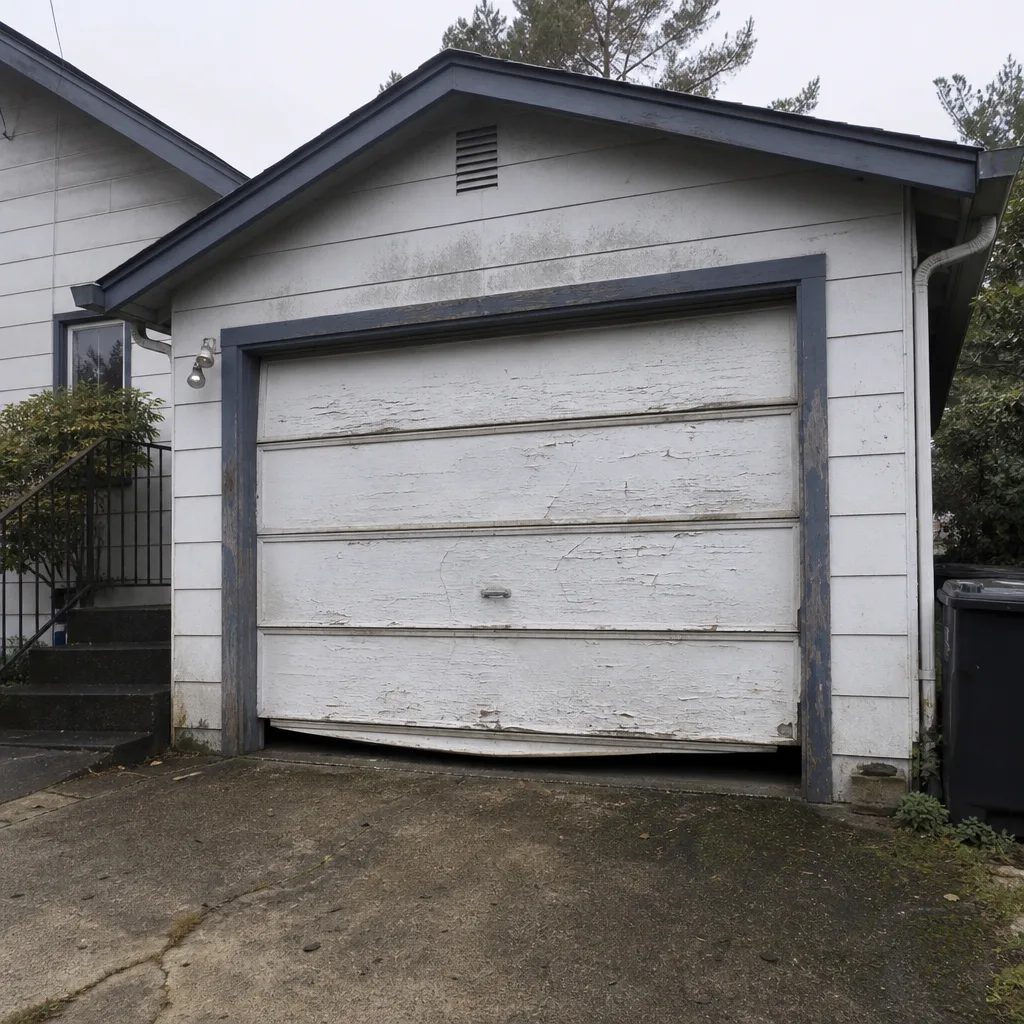 Before
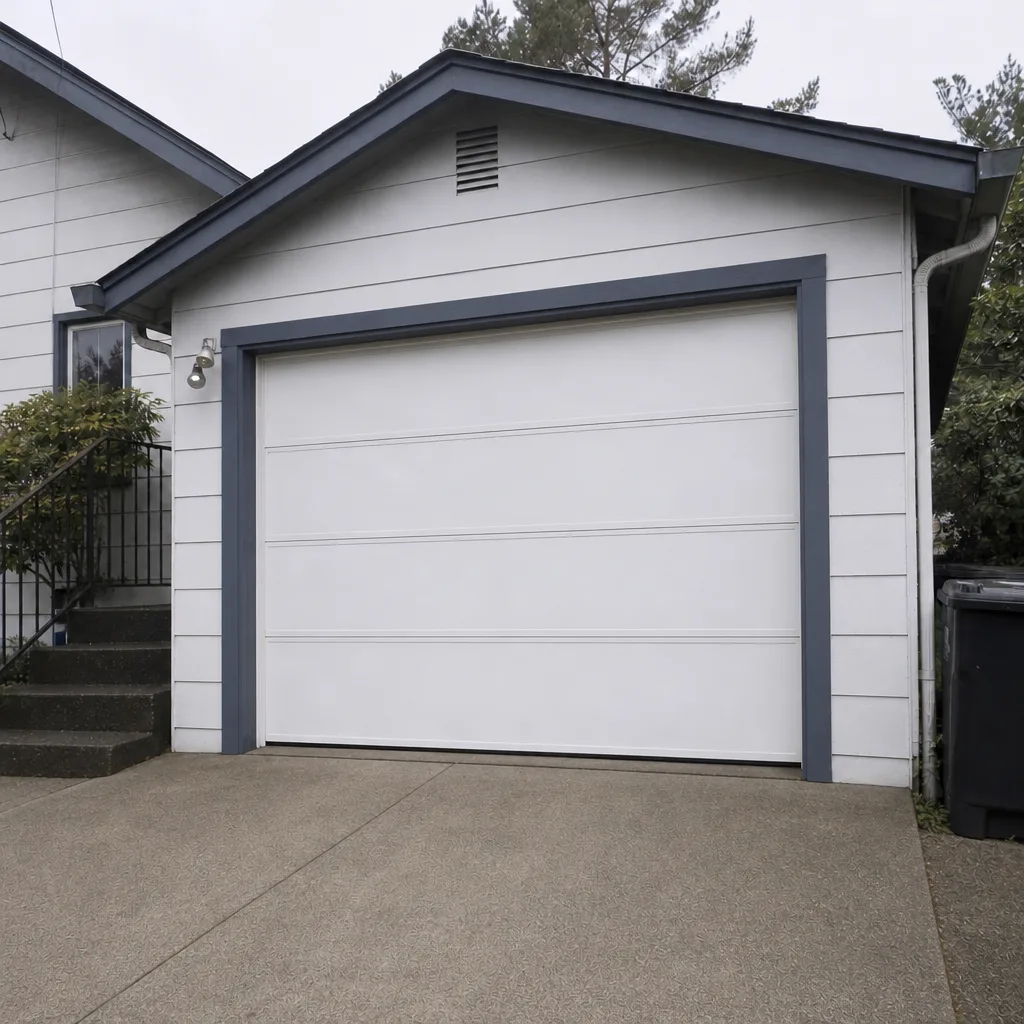 After
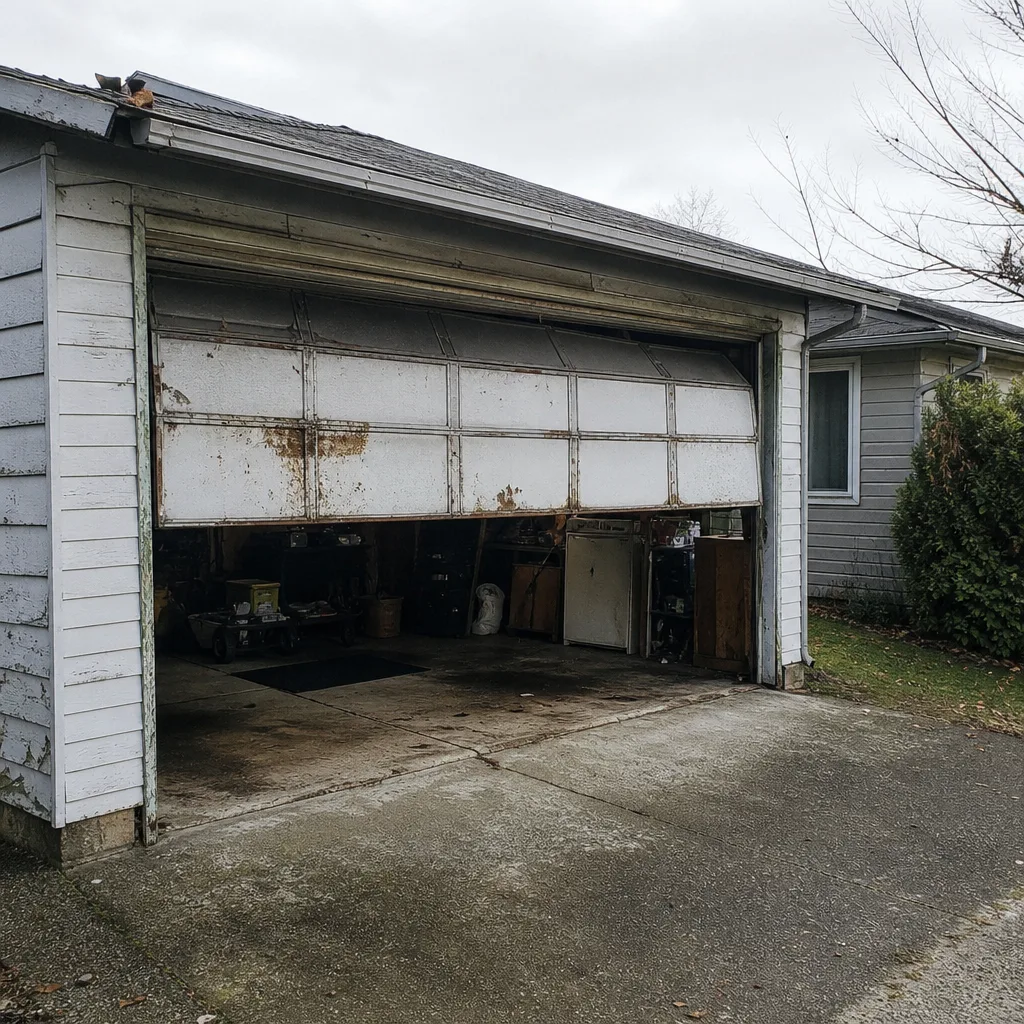 Before
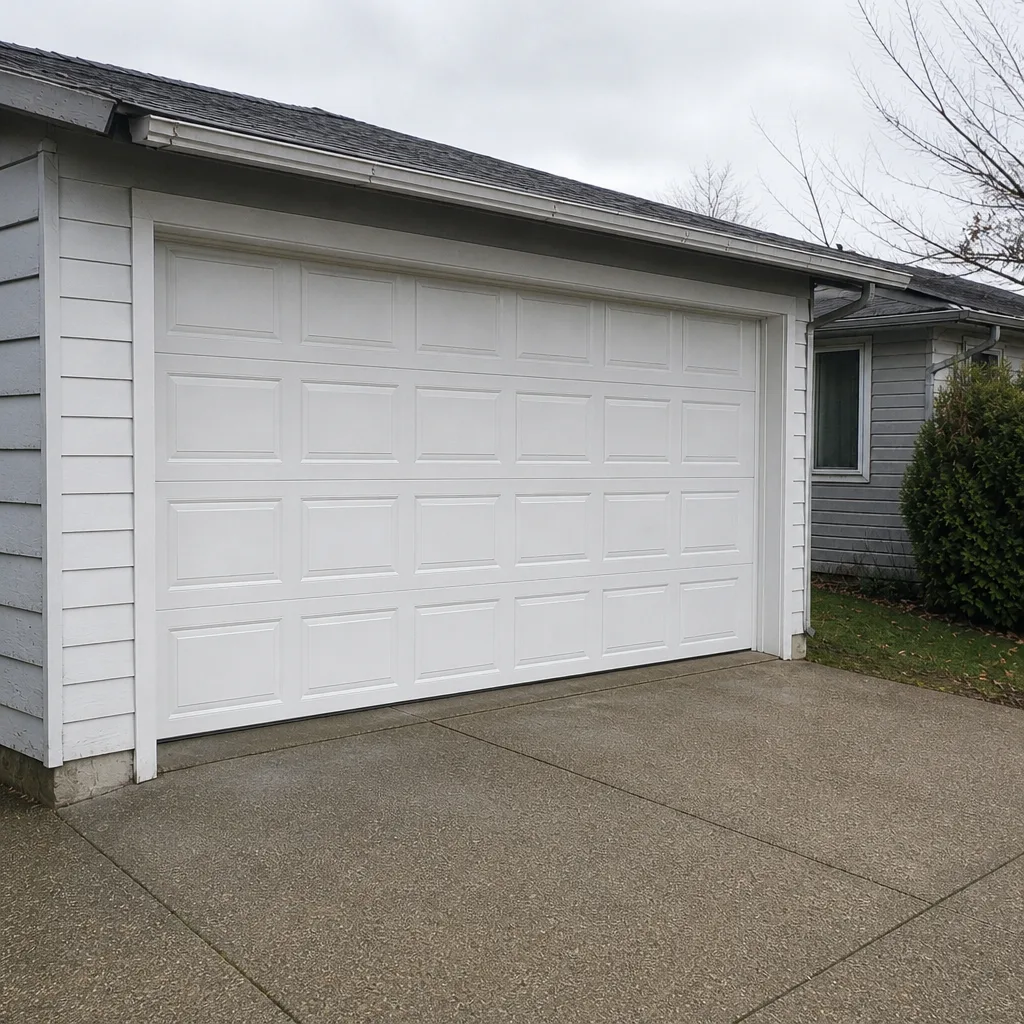 After
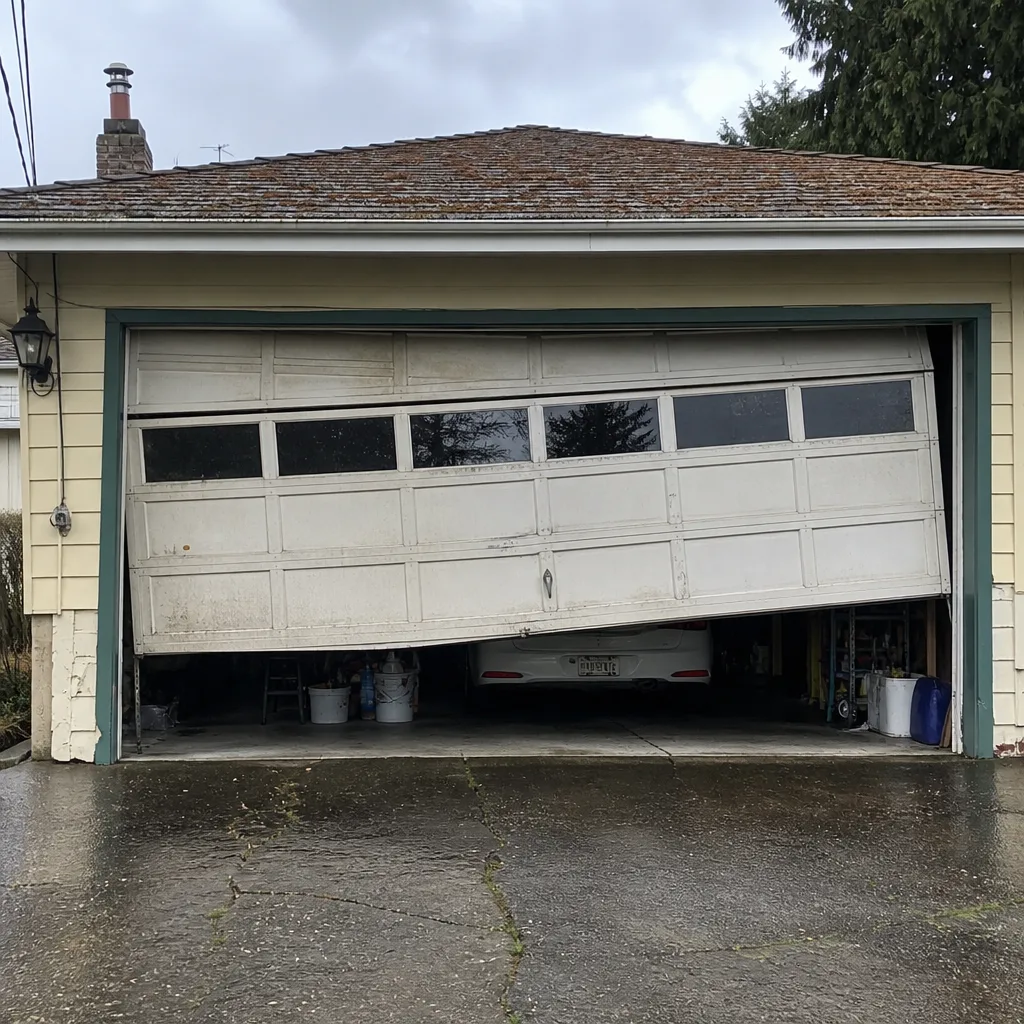 Before
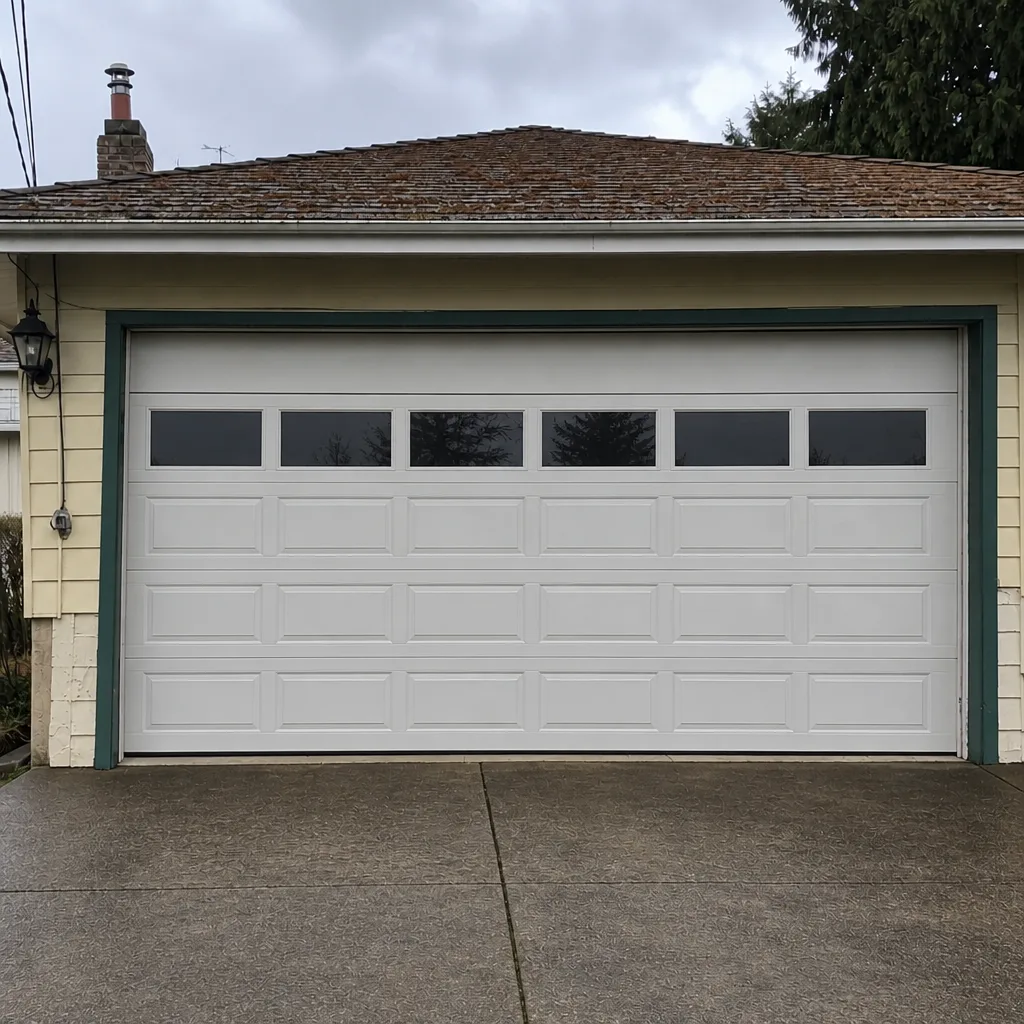 After
When to Call a Professional
Call when the problem touches stored energy or leaves the door unsafe to operate: a snapped or stretched spring, a frayed or rusted cable, a door off its tracks, a door hanging crooked or one that won’t stay up when lifted by hand. Call if the opener hums and doesn’t move the door, if a door reverses for no clear reason, or if any part looks rusted through. These are the situations where continuing to run the door does more damage, and where the safe answer is a trained technician rather than a guess. Burien Garage Door Repair Pros offers free estimates in Burien – call (877) 542-9430. We diagnose before we recommend, and the written price is agreed before work starts.
Frequently Asked Questions
Yes, for the metal parts. Burien’s long wet season and high humidity drive rust and corrosion, so springs, cables and bottom hardware tend to fail from corrosion before they reach the end of their normal cycle life. In drier climates the same parts often last longer between failures. Keeping parts dry, painted and lubricated is the best defense.
No. Torsion and extension springs store enormous energy, and a single wrong adjustment can cause a severe injury. Leave spring and cable work to a technician trained for it. Safe DIY tasks are things like replacing the bottom seal, lubricating hinges and rollers, and touching up rust – not the springs.
Often, yes. Spring, cable and opener repairs are frequently handled the same day for a straightforward failure. Call (877) 542-9430 and describe what’s happening with the brand and symptom, and we can tell you what to expect. Estimates are free.
Most doors are repairable. Replacement makes sense when the panels are rusted through or damaged beyond repair, the frame is compromised, or repeated failures on a very old door add up to more than a new one. Have the door diagnosed first – a specialist explains the actual failure before recommending anything.
We work on what you already have, across the eight most widely installed residential brands: LiftMaster, Chamberlain, Genie, Clopay, Amarr, Wayne Dalton, Craftsman and Raynor. That covers the openers and doors found in most Burien homes, from mid-century builds to newer subdivisions.
Matching panels on older doors can be difficult because profiles and colors change over the years. That’s one reason we lean repair-first: if the existing panels can be repaired or refinished, that’s usually the more practical path. A technician can tell you what’s realistic once they see the door. Call (877) 542-9430 for a free estimate.
The Bottom Line
Garage door problems in Burien are shaped by the climate and the housing stock, and knowing both helps you make a better call. Wet, cool weather wears out springs, cables and bottom hardware sooner, so keeping metal dry, painted and lubed matters more here than in drier places. Your door’s era and brand tell a technician a lot about how it fails, and a repair-first specialist – one who works on doors, openers and springs and nothing else – will diagnose before recommending anything. Most failures are fixable, the springs and cables are not a DIY job, and a written price should be agreed before work starts.
When something breaks, call (877) 542-9430 for a free estimate. We’ll tell you what actually failed and get you back in working order today when the job allows.
Written by the team at Burien Garage Door Repair Pros.